

ALERT: Study warns against climate-related health risks in Tanzania
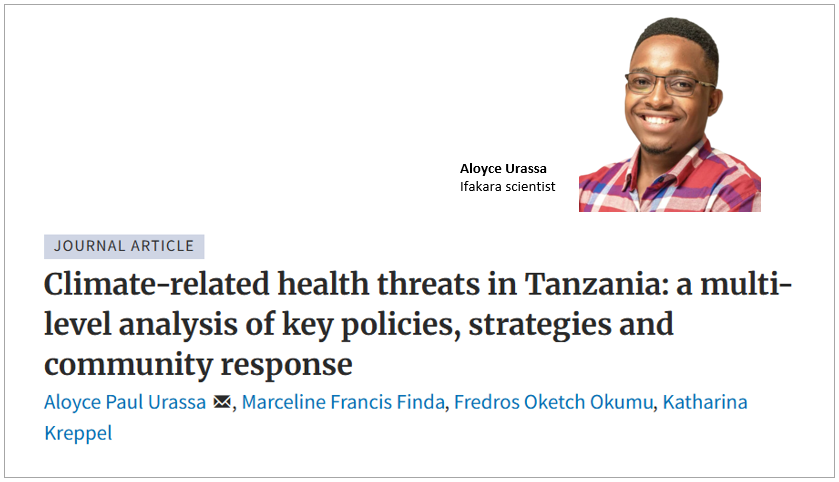
Floods, droughts and extreme heat are increasingly threatening health and livelihoods in Tanzania, with researchers warning that the country remains inadequately prepared to respond to the growing risks linked to climate change.
The warning comes from a study published recently in Health Policy and Planning, in which Ifakara Health Institute scientists examined how Tanzania is addressing climate-related health threats at both national and community levels.
Why the findings matter
Climate change is increasingly being linked to disease outbreaks, food insecurity and disruptions to health services across Africa. The researchers found that climate change is contributing to rising cases of malaria and diarrhoea diseases, alongside food shortages and declining agricultural productivity in several parts of Tanzania.
They warn that without stronger coordination and investment, climate-related health emergencies could further affect health systems and livelihood security.
Communities already feeling the impact
The study surveyed 388 people across four councils in southern Tanzania and interviewed government officials, researchers, development partners and non-governmental organizations between January 2024 and May 2025.
Nearly all respondents reported experiencing climate-related hazards such as floods, droughts and extreme heat, while 77% said they had observed noticeable climate changes in their communities.
Researchers also found that access to reliable climate and health information remains limited, with many households relying on personal observations and informal community networks for guidance. Although 73.7% of respondents said they had received some form of government support during climate-related crises, assistance was often inconsistent.
Policies exist, but gaps remain
The study found that while Tanzania has developed several climate-health policies and community initiatives, implementation remains weak. National stakeholders interviewed during the study said translating climate strategies into practical action at community level remains a major challenge.
Researchers identified weak cross-sector coordination, limited financing and gaps in policy implementation — particularly at local government level — as key barriers to preparedness.
Researchers call for stronger preparedness
Researchers say Tanzania needs stronger coordination across health, agriculture, environment and disaster management sectors, alongside increased investment in community-led adaptation.
“Strengthening multilevel governance, financing mechanisms and community-driven adaptation planning is essential to improve Tanzania’s preparedness for climate-related health threats,” they noted.
They further highlight four urgent priorities: improved risk communication, climate-smart agriculture, resilient health facilities, and inclusive early-warning systems. Without faster action, the researchers warn that more frequent extreme weather events could deepen pressure on health services and leave vulnerable communities at greater risk.
Ifakara scientists behind the study
The study was led by scientists from Ifakara Health Institute, with Aloyce Urassa serving as lead author. Other contributors included Marceline Finda, Fredros Okumu and Katharina Kreppel from The Nelson Mandela African Institution of Science and Technology.
Read the publication here.
We're a Registered Charity Organization in Tanzania
Ifakara Health Institute (IHI) is officially recognized as a charitable organization under the Income Tax Act. Certification issued on 20 March 2025 and valid until 31 December 2030.
Ifakara Health Institute (IHI) is officially recognized as a charitable organization under the Income Tax Act. Certification issued on 20 March 2025 and valid until 31 December 2030.