

MEETING: Partners review progress in malaria molecular surveillance in Tanzania
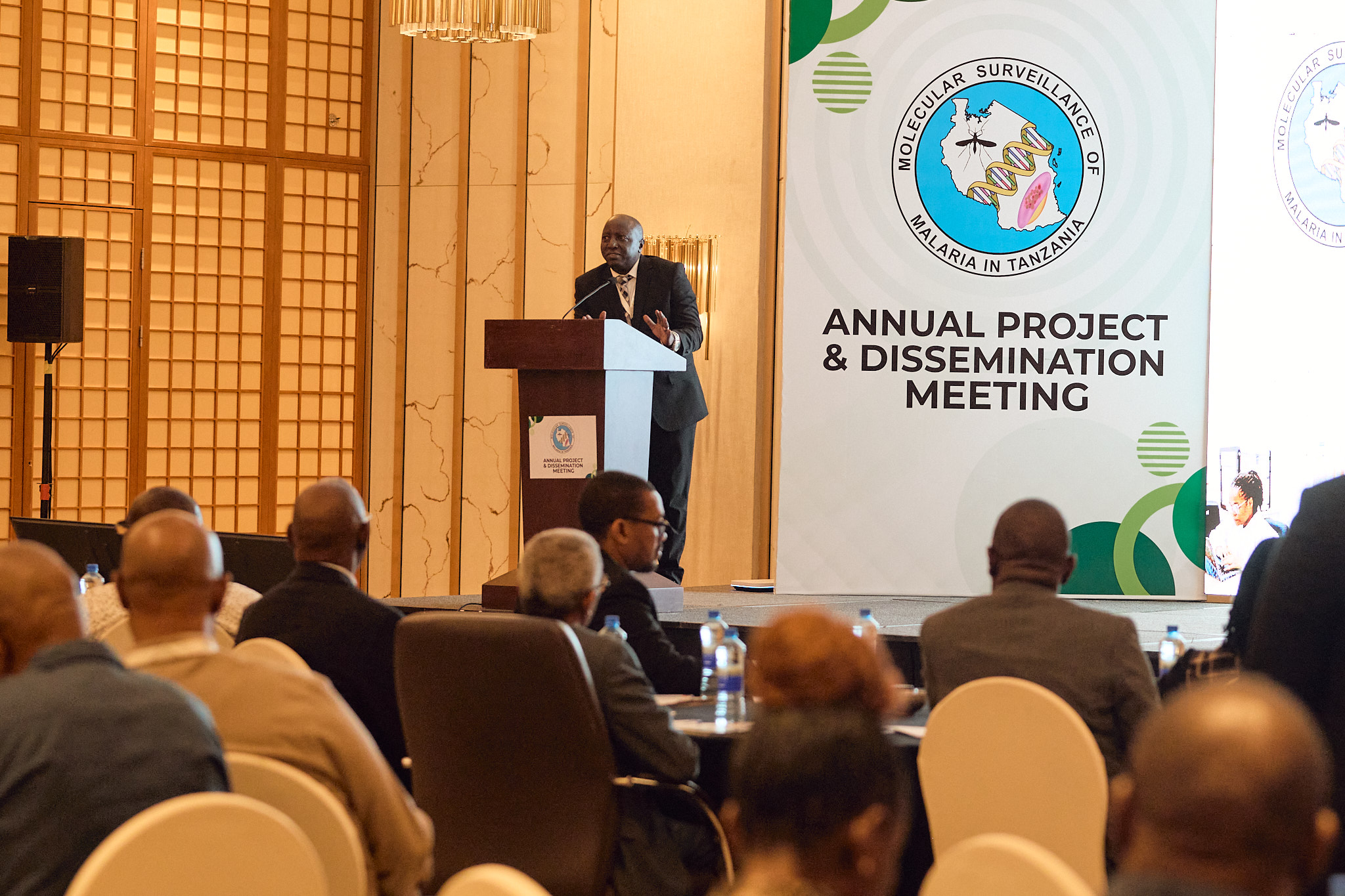
From 25–26 May 2026, stakeholders met in Dar es Salaam for the Second Annual Project and Dissemination Meeting (APDM) of the Molecular Surveillance of Malaria in Mainland Tanzania – Phase II (MSMT2) project.
The MSMT2 project, funded by the Gates Foundation and implemented by the Ifakara Health Institute (IHI), the National Institute for Medical Research (NIMR), and the Ministry of Health, conducts nationwide malaria molecular surveillance across all 26 regions of Mainland Tanzania.
The meeting brought together representatives from the Ministry of Health (national, regional, district, and facility levels), IHI, NIMR, World Health Organisation, Imperial College London, Swiss Tropical And Public Health Institute and other partners to review progress, share findings, and discuss how evidence from malaria molecular surveillance (MMS) can inform policy and targeted interventions.
In opening remarks, Dr. Said Aboud, Director General of NIMR, representing the Permanent Secretary of the Ministry of Health, highlighted that malaria remains a major public health challenge despite significant national progress driven by research, strengthened surveillance systems, modern technologies, and multi-sector collaboration.
He emphasized that MSMT2 supports national efforts by strengthening surveillance using genomics, serology, and advanced analytics to guide evidence-based decision-making and targeted interventions. He further underscored government commitment to research, capacity building, and sustainability of surveillance systems.
The Role of Molecular Surveillance
Malaria molecular surveillance provides a deeper level of monitoring than conventional systems by tracking parasite populations, detecting drug resistance, and identifying genetic changes that may affect diagnostics. It serves as an early warning system for emerging threats and supports timely public health responses.
The MSMT2 project collects samples through routine facility surveillance, cross-sectional and follow-up surveys, and pilot entomological studies. These are analyzed using qPCR, targeted sequencing, whole genome sequencing, serology, and Oxford Nanopore Technologies. The project also builds national capacity through training in genomics, bioinformatics, and modelling.
MSMT2 delivers on samples and capacity building
MSMT2 has exceeded several targets, collecting 45,030 samples against a target of 31,650 (142%). Health facility surveillance reached 116% of target, cross-sectional surveys 261%, and follow-up surveys 169%. In addition, 28,828 RDT-positive samples were collected for molecular and genomic analysis.
Capacity building has progressed through multiple intern cohorts, some of whom have secured employment at IHI and CUHAS, while others continue laboratory training. MSc and PhD students are actively involved in fieldwork, analysis, and manuscript development, alongside strengthened technical staffing.
The project has produced three peer-reviewed publications, seven preprints, and 13 manuscripts in preparation. Policy briefs on antimalarial drug resistance have also been developed to support decision-making.
Day 1 – Science, strategy, and national perspectives
The scientific program opened with a keynote on rethinking malaria molecular surveillance in Africa. This was followed by presentations on antimalarial drug resistance monitoring and laboratory strengthening, as well as MSMT/MMS outcomes from 2020–2026.
Partner updates were presented by the National Malaria Control Programme (national strategy and surveillance), Prime Minister's Office - Regional Administration And Local Government (Pmo-Ralg) (implementation and operations), Zanzibar Malaria Elimination Programme (Zanzibar malaria strategy), National Public Health Laboratory (pathogen genomics), WHO (surveillance use cases), and the East African Community (regional trends and drug resistance).
Call to action: from evidence to action
Dr. Honorati Masanja, Chief Executive Director of the Ifakara, challenged participants to strengthen the translation of research into policy and practice, stressing that the real value of surveillance lies in its practical application to improve malaria control.
He emphasized that achieving impact requires close collaboration across institutions and sectors, warning against working in silos and underscoring the need for coordinated efforts to ensure that scientific evidence effectively informs decision-making and national response strategies with the main aim of saving lives.
Day 2 – technical deep dives
The second day focused on advanced technical discussions, including species mapping, population genetics, and the use of Oxford Nanopore sequencing. Sessions also explored genetic resistance (including dhps mutations), parasite prevalence trends for micro-stratification, and strengthening stakeholder engagement in molecular surveillance.
Overall, the meeting reinforced the importance of data-driven, molecular approaches in strengthening malaria control and elimination efforts in Tanzania and the region.
Team retreat in Mikumi
Before the meeting the team held a retreat at Mikumi National Park on the 23rd of May 2026, creating space to step away from daily routines and reconnect in a more relaxed and reflective environment. Set against the park’s iconic landscapes and abundant wildlife, the retreat provided an ideal setting for team bonding, strategic reflection, and strengthening collaboration across departments.
We're a Registered Charity Organization in Tanzania
Ifakara Health Institute (IHI) is officially recognized as a charitable organization under the Income Tax Act. Certification issued on 20 March 2025 and valid until 31 December 2030.
Ifakara Health Institute (IHI) is officially recognized as a charitable organization under the Income Tax Act. Certification issued on 20 March 2025 and valid until 31 December 2030.