

MALARIA: Prevention drug saves lives, but scientists warn resistance is rising
A widely used malaria prevention drug continues to protect millions of pregnant women and children across Africa, but scientists are warning that growing drug resistance could threaten its long-term effectiveness.
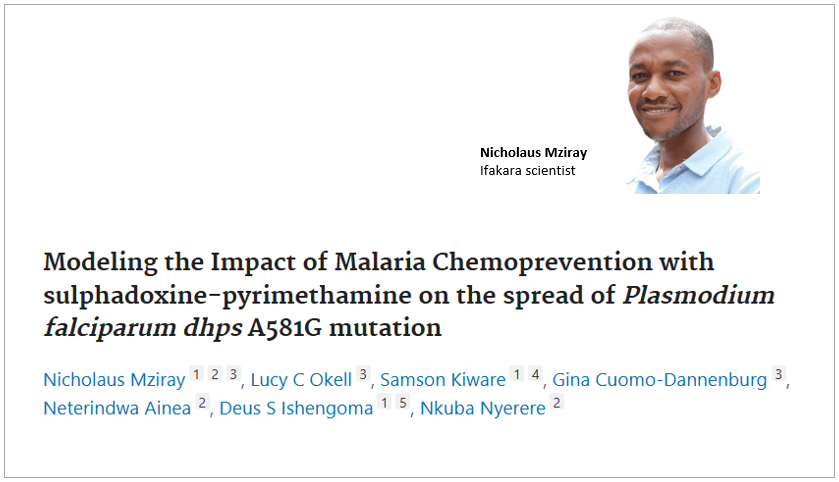
In a recently published study in the Infectious Disease Modelling journal, researchers found that repeated use of sulfadoxine-pyrimethamine (SP), one of the world’s key malaria prevention medicines, could accelerate the spread of resistant malaria parasites.
The study was led by scientist Nicholaus Mziray from Ifakara Health Institute in collaboration with other researchers from Tanzania and the UK.
A medicine that has protected millions
SP is commonly used in malaria chemoprevention strategies, including preventive treatment during pregnancy, treatment for infants, seasonal malaria chemoprevention, and mass drug administration.
Rather than treating malaria after infection, the drug is given to vulnerable groups to help prevent illness before it occurs. Researchers say the approach has contributed significantly to reducing malaria cases and deaths in high-burden settings.
However, growing resistance among malaria parasites has raised concerns about how long the drug will remain effective.
“SP-based prevention continues to provide major public health benefits,” the researchers noted, “but its long-term effectiveness may be threatened if resistance continues to rise.”
Scientists investigate growing resistance
The researchers focused on a highly resistant malaria parasite mutation known as dhps A581G, which reduces the parasite’s sensitivity to SP.
Using computer modelling, the team examined how this resistant strain could spread under different malaria prevention strategies and levels of treatment coverage.
Their findings showed that wider and repeated use of SP-based prevention strategies can increase the spread of resistant parasites.
“Despite the presence of the dhps A581G mutation, model results suggest that chemoprevention using SP still remains effective in averting clinical malaria cases,” the researchers said.
Higher coverage linked to faster spread of resistance
In simulations where malaria prevention coverage reached 45% of the population:
- resistant parasites increased from 11% to 20.6% when communities received three treatment rounds;
- resistance rose further to 27.8% when five treatment rounds were used
The study found that treatment coverage had a greater influence on the spread of resistance than the number of treatment cycles.
“The results of this model suggest that both chemoprevention coverage levels and the number of treatment cycles influence the spread of the dhps A581G mutation,” the researchers wrote, “with coverage levels being the most influential factor.”
Balancing today's benefits with tomorrow's risks
The findings do not mean countries should stop using SP, the researchers emphasize. Instead, they highlight the need to track the growing resistance.
“Careful policy planning, decision-making, and ongoing molecular surveillance are essential to optimize the benefits of chemoprevention while minimizing the spread of resistant parasites,” they noted.
However, they warned about a “trade-off” between the immediate benefits of protecting vulnerable populations and the long-term risk of accelerating resistance.
Why the findings matter
Malaria remains one of the world's deadliest infectious diseases, claiming hundreds of thousands of lives each year.
The findings add to growing concerns that increasing drug resistance could erode progress made against the disease over the past two decades and highlight the importance of monitoring the effectiveness of existing prevention tools.
Tanzanian and international scientists behind the study
The study was led by Nicholaus Mziray of Ifakara Health Institute, with contributions from researchers from Sokoine University of Agriculture, the National Institute for Medical Research, and Imperial College London.
Scientists Samson Kiware and Deus Ishengoma from Ifakara Health Institute also contributed to the study.
Read the publication here.
We're a Registered Charity Organization in Tanzania
Ifakara Health Institute (IHI) is officially recognized as a charitable organization under the Income Tax Act. Certification issued on 20 March 2025 and valid until 31 December 2030.
Ifakara Health Institute (IHI) is officially recognized as a charitable organization under the Income Tax Act. Certification issued on 20 March 2025 and valid until 31 December 2030.