

MALARIA VACCINE: Study finds long-lasting antibodies may improve protection against disease
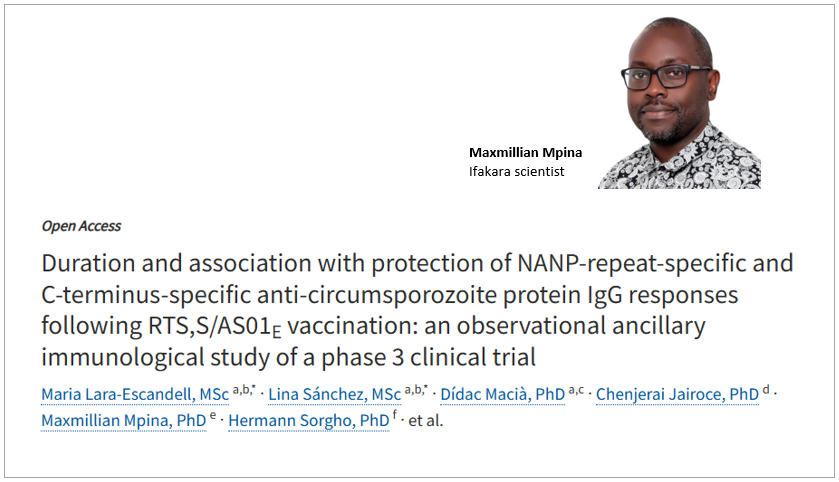
A team of scientists from Africa and Europe has uncovered new evidence that could help improve malaria vaccines, showing that long-lasting immune responses may offer stronger protection against the disease than short-lived spikes in antibodies.
The study, published recently in The Lancet Infectious Diseases, analyzed blood samples from more than 1,200 children across six African countries who received the RTS,S malaria vaccine, the world’s first malaria vaccine recommended for widespread use by the World Health Organization (WHO).
Researchers from multiple institutions in Africa and Europe, including Maxmillian Mpina of the Ifakara Health Institute, worked together to understand which immune responses best predict protection against malaria and how these responses change over time.
Not all antibodies offer equal protection
Malaria vaccines work by training the immune system to recognize and attack the malaria parasite before it causes illness. A key target is the circumsporozoite protein (CSP) found on the surface of the parasite.
For many years, most research has focused on antibodies targeting a section of this protein called the NANP repeat region, which produces a strong early response after vaccination. However, this study found that antibodies targeting another region—the C-terminus—may play a more important role in long-term protection.
These C-terminal antibodies lasted longer in the body and were more strongly associated with reduced risk of malaria.
Duration of immunity matters more than early strength
The study showed that antibody levels naturally decline over time, but those targeting the C-terminus decreased more slowly than NANP-targeting antibodies.
Children who maintained higher antibody levels for longer were better protected than those who only showed a strong response shortly after vaccination. Even after adjusting for other immune factors, C-terminal antibodies remained independently associated with lower malaria risk.
Why vaccine protection fades
The findings may help explain why protection from the RTS,S vaccine decreases over time. They suggest that the durability of the immune response—not just the peak level after vaccination—is a key factor in how well the vaccine performs in the long term.
Guiding next-generation malaria vaccines
Researchers say future malaria vaccines may need to go beyond generating strong short-term antibody responses and instead focus on sustaining immunity over time.
The study highlights the importance of strengthening responses to the C-terminal region of the circumsporozoite protein, which has received less attention in earlier vaccine designs.
As the authors note, next-generation vaccine strategies should prioritize maintaining protective C-terminal responses, using approaches that support long-lasting antibody activity, and measuring antibody durability—not just peak levels—in clinical trials.
“For second-generation circumsporozoite protein vaccines, our results support the use of antibody maintenance, rather than peak response, as a key immunological endpoint in clinical trials,” the authors wrote. They added that this approach could accelerate the development of vaccines with higher and longer-lasting efficacy, advancing global malaria control goals.
Why this matter
Malaria continues to claim hundreds of thousands of lives each year, mostly among children in sub-Saharan Africa.
These findings offer important insights for designing more effective vaccines that provide longer-lasting protection and help reduce the global burden of malaria.
Read the publication, here.
We're a Registered Charity Organization in Tanzania
Ifakara Health Institute (IHI) is officially recognized as a charitable organization under the Income Tax Act. Certification issued on 20 March 2025 and valid until 31 December 2030.
Ifakara Health Institute (IHI) is officially recognized as a charitable organization under the Income Tax Act. Certification issued on 20 March 2025 and valid until 31 December 2030.