#AJSC2026: Ifakara, partners highlight hidden malaria and anemia burden
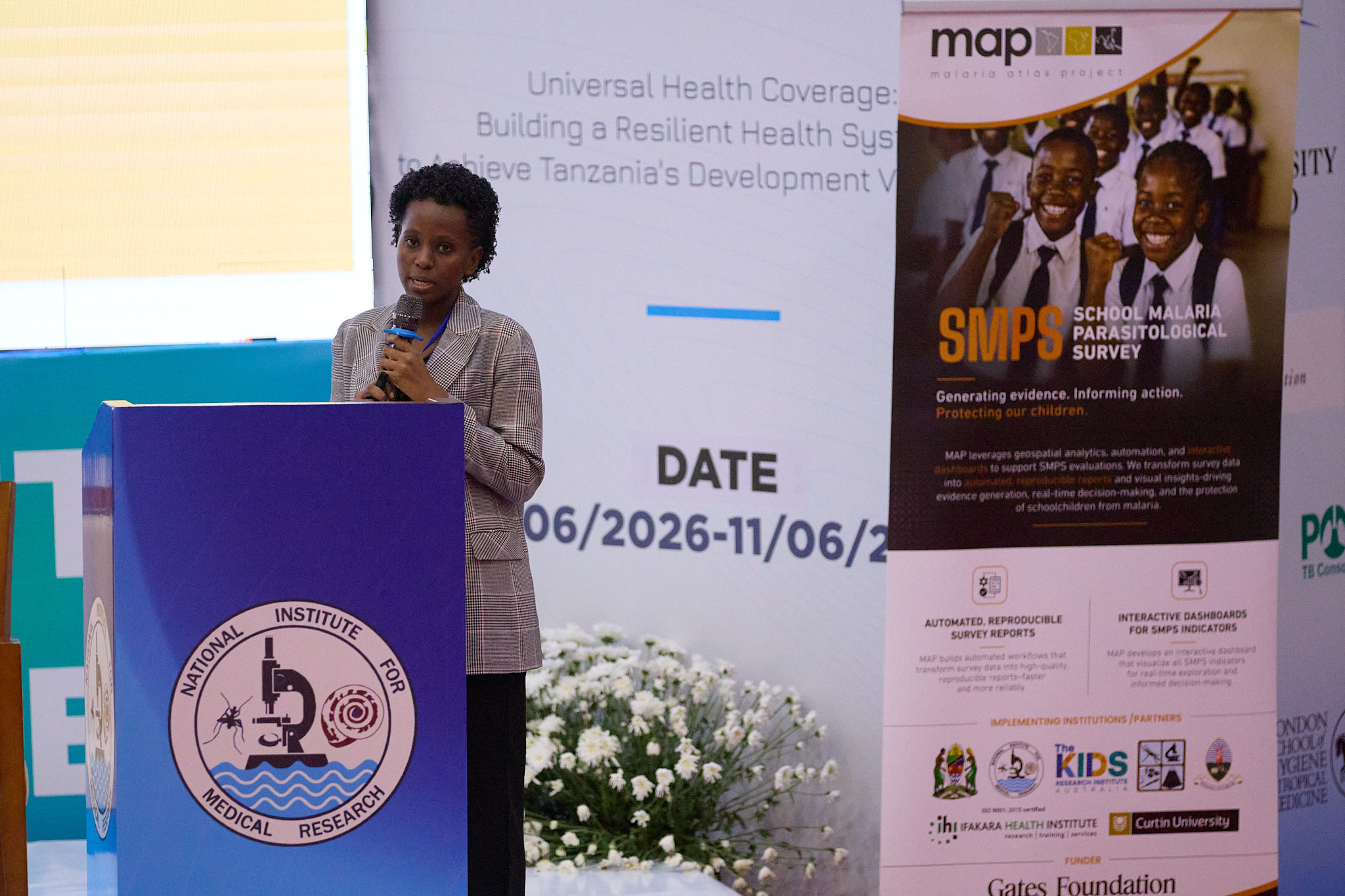
On the final day of the conference, the Malaria Atlas Project (MAP), a collaborative international research initiative implemented by Ifakara Health Institute, The Kids Research Institute Australia and Curtin University, hosted a symposium during the 33rd Annual Joint Scientific Conference organized by the National Institute for Medical Research (NIMR).
The symposium, titled “New Recommendation: From malaria to multisector health: A decade of school-based surveillance informing targeting and integrated interventions in Tanzania,” brought together researchers, policymakers, health professionals, and stakeholders from the National Malaria Control Programme (NMCP) under the Ministry of Health, alongside NIMR and partner institutions. The discussions focused on how long-term school-based surveillance data can be used not only for malaria control, but also to guide broader, more integrated child health interventions.
Evidence reveals hidden malaria infections and overlapping anemia burden
The MAP team presented key findings from their work in Tanzania. Ifakara scientist, Sarah Leonard shared findings on how many school children carry malaria parasites without showing symptoms, and how this hidden infection varies by age, sex, and location across different councils. Her presentation highlighted how these silent infections continue to sustain transmission even when children do not appear sick.
Moving toward integrated responses to hidden health burdens
Ifakara scientist, Martha Ndaikeje presented on how malaria and anemia often occur together in school-aged children, and what factors increase the risk of children suffering from both conditions at the same time. Her findings emphasized the combined health burden affecting school children and the need for integrated interventions that address multiple conditions at once.
A key message from the symposium was the importance of shifting from disease-specific responses to broader, integrated health strategies that use school-based surveillance data to guide action. Researchers noted that such systems can help identify overlapping health problems early and support more coordinated responses across the health sector.
Strengthening evidence for action
The session concluded with a call for stronger collaboration between researchers and international partners to strengthen evidence-based decision-making and accelerate progress toward malaria control and improved child health in Tanzania.
We're a Registered Charity Organization in Tanzania
Ifakara Health Institute (IHI) is officially recognized as a charitable organization under the Income Tax Act. Certification issued on 20 March 2025 and valid until 31 December 2030.
Ifakara Health Institute (IHI) is officially recognized as a charitable organization under the Income Tax Act. Certification issued on 20 March 2025 and valid until 31 December 2030.