

NEWBORN CARE: Poor data quality threatens efforts to save newborn lives in Uganda
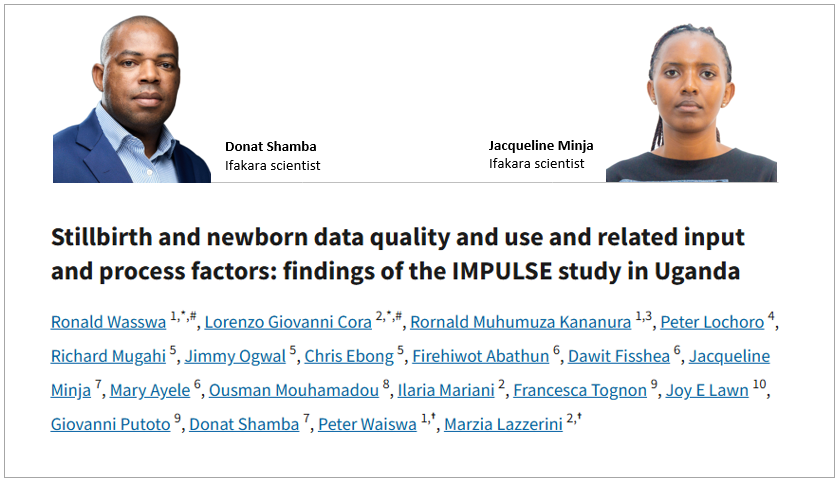
A new study has found that while health facilities in Uganda are collecting large amounts of information on newborns and stillbirths, concerns about data quality and limited use may be undermining efforts to improve newborn health outcomes.
The study, conducted between 2022 and 2023, assessed the quality and use of newborn and stillbirth data across 51 sites, including 31 health facilities, 20 district health offices, and the Ministry of Health.
Published recently in the Journal of Global Health, the research included contributions from Ifakara Health Institute scientists Donat Shamba and Jacqueline Minja, working alongside colleagues from Uganda, Ethiopia, Italy, and the United Kingdom.
Data is available, but accuracy remains a challenge
The researchers found that health facilities and district health offices were generally successful in collecting newborn and stillbirth data, with most key information being available and complete.
However, data accuracy was much lower, ranging from 26% to 61%, raising questions about how reliably it reflects what is happening in health facilities.
Information not driving decisions
The study also found that data was not being fully used to improve services.
While district health officials were more likely to review and act on the information collected, data use at the health facility level remained limited. This means opportunities to identify problems, track progress and improve care for newborns may be missed.
As a result, information that could help identify gaps in care and guide improvements was not always translated into action.
Gaps in resources and skills
Several factors were found to hinder data quality and use. Many facilities lacked essential resources, including reliable internet access, data management resources, staff development plans, and adequate skills for data analysis.
Nearly three-quarters of those involved in collecting and using newborn health data said improvements were needed. The researchers say addressing these gaps could help health workers make better decisions and strengthen efforts to improve newborn care.
A roadmap for improvement
Concluding the study, the researchers say improving the quality and use of newborn and stillbirth data should be a priority for policymakers.
They recommend three key priorities: strengthening data verification processes, improving data analysis skills at the health facility level, and making regular data reviews part of routine decision-making. They say these steps could help turn data into action and improve care for newborns and mothers.
Why this matters
Accurate data, the authors note, is essential for understanding why newborns die, identifying weaknesses in care, and directing resources to where they can have the greatest impact.
Strengthening health information systems could help Uganda and other countries facing similar challenges make better-informed decisions and improve outcomes for mothers and babies.
Read the publication here.
We're a Registered Charity Organization in Tanzania
Ifakara Health Institute (IHI) is officially recognized as a charitable organization under the Income Tax Act. Certification issued on 20 March 2025 and valid until 31 December 2030.
Ifakara Health Institute (IHI) is officially recognized as a charitable organization under the Income Tax Act. Certification issued on 20 March 2025 and valid until 31 December 2030.