
WEBINAR: East African experts advance TB science at Jirani Symposium
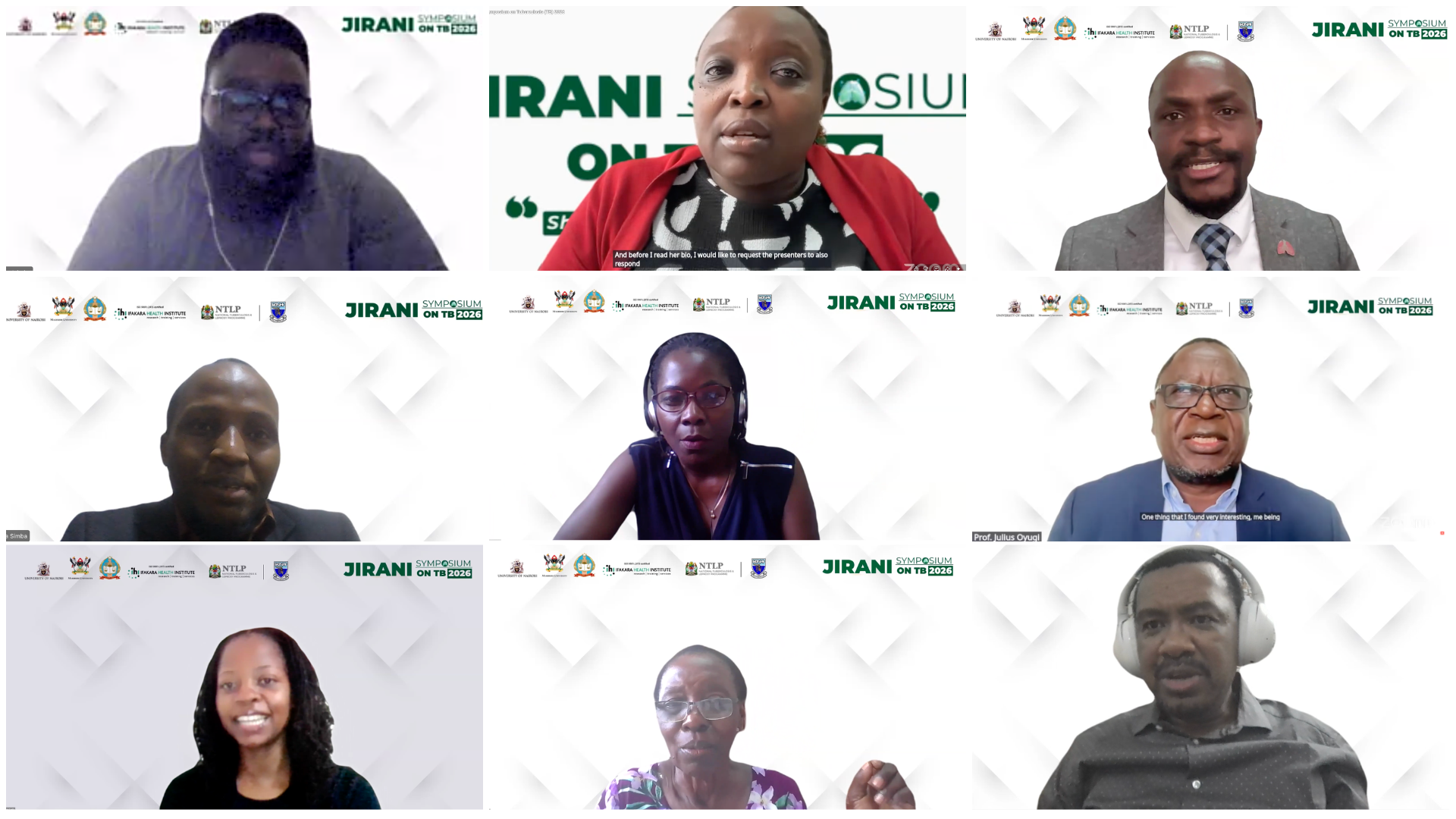
Leading researchers, clinicians, policymakers and national TB programme representatives from East Africa converged at the Jirani Symposium on TB 2026 under the theme “Shared Burden, Shared Response,” to accelerate regional collaboration in the fight against tuberculosis.
Jointly convened by the Ifakara Health Institute (Tanzania), Makerere University (Uganda) and the University of Nairobi (Kenya), the inaugural symposium underscored TB as a cross-border public health challenge requiring coordinated action.
Opening the meeting, Dr. Yahaya Simba and George Ichoho, framed the “Jirani” concept as a call for neighbourly scientific collaboration beyond national boundaries. Delivering the coordinating address, Dr. Honorati Masanja, Chief Executive Director of the Ifakara Health Institute, noted that East Africa, with over 400 million people, bears an estimated 600,000 new TB cases annually.
“Tuberculosis knows no borders,” Dr. Masanja said, urging stronger regional collaboration, investment in African-led research, and greater attention to post-TB lung health.
Tanzania: TB burden and prevention science
Tanzania’s session, led by the Ifakara Health Institute and chaired by Dr. Issa Sabi and Dr. Anange Lwila of NIMR, highlighted TB epidemiology, transmission trends, and advances in host–pathogen research. Dr. Riziki Kisonga (National TB and Leprosy Program-Tanzania) opened the session by outlining the country's TB burden and programmatic implications, followed by Dr. Hellen Hiza (Ifakara Health Institute), who discussed unravelling host-pathogen interactions using in vitro infection models.
Evidence from multidrug-resistant TB preventive therapy trials was shared by Prof. Seddon James (Imperial College London), who detailed what the TB-CHAMP and VQUIN trials teach about MDR-TB chemoprophylaxis. Addressing long-term patient outcomes, PD, Dr. med. Rachow Andrea (Ludwig-Maximilians-Universität) highlighted post-TB lung impairment challenges, while Dr. Maryam Amour (Muhimbili University of Health and Allied Sciences) presented findings on active case finding among close contacts of adolescents with TB infection, reinforcing the need for early detection, prevention, and sustained research investment.
Uganda: Diagnostics and implementation science
The Makerere University-led discussions spanned two parts, opened with a coordinating address from the Principal of the Makerere University College of Health Sciences and chaired by Dr. Lydia Nakiyingi and Prof. Harriet Mayanja. Dr. Henry Luzze (National TB and Leprosy Program-Uganda) initiated the dialogue with a look at Uganda's national programme priorities and innovations. Evolving MDR-TB treatment regimens were evaluated by Dr. Susan Adakun Akello (Mulago National Referral Hospital), while Dr. Baluku Joseph (Makerere University) spoke on post-TB morbidity and mortality. Speakers stressed that TB treatment success does not always equate to full recovery, citing post-TB morbidity as a growing concern.
Transitioning research into policy, Dr. Achilles Katamba (Makerere University) provided insights on the translation of research evidence into practice. Additionally, Dr. Eric Wobudeya (Mulago National Referral Hospital) targeted the next generation of care by detailing persistent challenges and solutions in paediatric TB diagnosis.
Kenya: Vulnerable populations and emerging research
The University of Nairobi session, introduced by the Dean of the Faculty of Health Sciences and chaired by Dr. Winnie Mutai and Prof. David Odongo, examined clinical complications and cutting-edge transmission tracking. Nelly Mukiri (National Tuberculosis, Leprosy and Lung Disease Program Kenya) reviewed epidemiology and programmatic trends, while Dr. Marybeth Maritim (University of Nairobi) addressed the management of Drug-Induced Liver Injury (DILI) in TB patients.
The genetic diversity and drug-resistant patterns of MTBC circulating in Western Kenya were presented by Susan Musau (University of Nairobi), followed by an overview of extrapulmonary TB by Asiko Ongaya (Kenya Medical Research Institute). Highlighting novel diagnostic approaches, Wilfred Bundi (Kenya Medical Research Institute) demonstrated how face mask sampling is associated with Mycobacterium tuberculosis bacillary load—though not directly with transmission—in Nairobi. Throughout the session, the need to rapidly integrate research into national programmes was emphasised.
Progress and persistent gaps in Somali & DRC
A closing dialogue, "The Jirani Dialogue on TB," was chaired by Dr. Yahaya Simba (IHI) and George Ichoho (UoN). Featuring national TB programme leaders Dr. Mohamed Jafar Salah (National TB Program Manager of Somalia), and Prof. Serge Bisuta from the University of Kinshasa, DRC, the discussion highlighted national successes alongside persistent barriers. Both leaders emphasized that despite gains in detection and treatment, delayed diagnosis, regional access challenges, and escalating drug resistance remain formidable hurdles. Participants universally called for stronger surveillance and cross-border coordination.
The symposium concluded with the presentation by the Jirani Impact Sub-Committee, thanking the organizers, presenters and participants for contributing to the platform. As the inaugural meeting closed, delegates emphasised a shared message: while TB remains a regional burden, its elimination depends on shared science, shared systems, and shared resolve.