

MALARIA: Hidden infections continue to fuel transmission in Tanzania
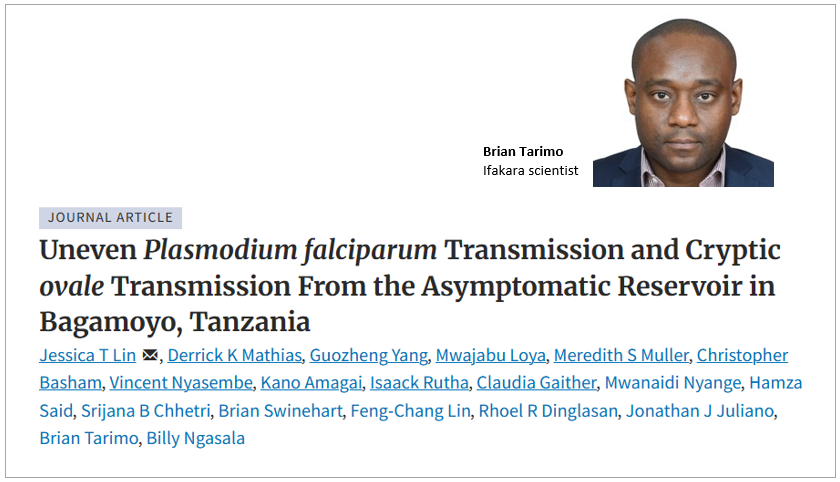
People carrying malaria parasites without feeling sick may be playing a much bigger role in spreading the disease than previously thought, according to a new study conducted in Bagamoyo, Tanzania.
Published recently in the Journal of Infectious Diseases, the study found that many symptom-free individuals can still infect mosquitoes, allowing malaria to persist in communities even when infections go unnoticed.
Researchers from Tanzania and the United States used a direct skin-feeding method, in which laboratory-reared mosquitoes fed on volunteers with malaria before being tested for infection. This enabled scientists to directly measure how effectively people passed malaria parasites to mosquitoes.
The research team included Ifakara Health Institute scientist Brian Tarimo, working alongside colleagues from University of North Carolina, University of Florida, and Muhimbili University of Health and Allied Sciences.
Low-level infections keep malaria circulating
The study involved 491 participants aged five years and older who tested positive for Plasmodium falciparum, the deadliest malaria parasite, through either rapid diagnostic tests (RDTs) or more sensitive molecular methods.
Of the 491 participants enrolled in the study, more than one in five (22%) were able to infect mosquitoes.
As expected, people who tested positive by RDTs generally infected more mosquitoes. However, researchers also found that some individuals with very low parasite levels could still transmit malaria. In some cases, participants infected mosquitoes even when the parasites were undetectable by PCR, one of the most sensitive diagnostic tools available.
These findings suggest that infections carrying parasite levels close to, or below, current detection limits can still contribute to malaria transmission, posing a challenge for elimination efforts that rely on identifying and treating infected individuals.
School-age children carry the greatest burden
One of the study's most striking findings was the role of school-age children in sustaining malaria transmission.
Although they represented just over a quarter of participants, they were linked to nearly 60% of all infected mosquitoes detected during the study. The findings point to school-age children as a key group for targeted malaria prevention and control efforts.
A small number of people drive most transmission
Malaria transmission was also found to be highly uneven across the population.
While about half of the infectious participants infected only one mosquito, just 16 individuals, roughly 3% of those enrolled, accounted for 57% of all infected mosquitoes.
This suggests that targeting highly infectious individuals could potentially reduce transmission and complement broader malaria control strategies.
Unexpected evidence of another malaria parasite
The study also found that Plasmodium ovale, a less well-known malaria parasite, was often passed to mosquitoes together with Plasmodium falciparum.
Nearly half of the infectious mosquito samples analyzed contained P. ovale, often alongside P. falciparum. The finding indicates that P. ovale may be circulating more widely than previously recognized and warrants greater attention in future malaria control efforts.
Why the findings matter
The study highlights a major challenge for malaria elimination: people carrying very low levels of malaria parasites—often without symptoms and sometimes undetectable even by highly sensitive tests—can still infect mosquitoes and sustain transmission.
As malaria cases decline, these hidden infections may play an increasingly important role in keeping the disease circulating within communities.
The researchers say that targeting symptom-free infections, particularly among school-age children, and developing new ways to identify highly infectious individuals could help close remaining transmission gaps and speed up progress towards malaria elimination.
Read the publication here.