

TB CARE: Portable testing offers faster diagnosis for patients in Tanzania, Mozambique
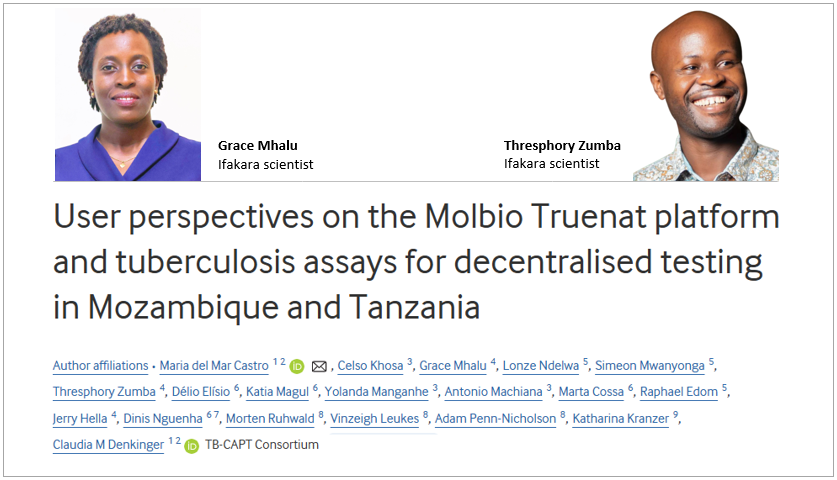
A study conducted in Tanzania and Mozambique has found that a portable tuberculosis (TB) testing system, known as Truenat, is easy to use and well accepted by health workers, patients, and policymakers, offering a faster alternative to traditional diagnostic methods.
Participants in the study highlighted several advantages of the Truenat platform, including same-day test results, reduced return visits for patients, and lower infrastructure requirements compared to existing testing methods, which typically rely on centralized laboratory systems where samples are transported off-site and results are returned after several days or longer. These benefits were particularly important in health facilities with limited diagnostic capacity.
Evaluating Truenat in real-world settings
The study, conducted by researchers from Germany, Tanzania, and Mozambique as part of a clinical trial, involved interviews with people with suspected TB, healthcare workers, and national decision-makers, alongside observations of testing procedures in health facilities.
The findings, published in the BMJ Global Health, showed that Truenat, which has been recommended by the WHO in 2020, delivered results more quickly—sometimes on the same day—and reduced the need for patients to make repeated visits to health facilities.
Why this matters
Timely diagnosis is essential to controlling TB, yet many patients in resource-limited settings face delays due to limited testing capacity and the need to send samples to distant laboratories.
By enabling rapid testing closer to patients, Truenat offers a promising alternative for decentralised TB confirmatory testing. The tool reduces diagnostic delays, enables earlier treatment, and strengthens efforts to reduce the burden of TB in resource-limited settings.
Health workers and patients value rapid testing
Healthcare providers reported that the rapid test was simple to operate and required less infrastructure than the widely used GeneXpert platform, which often depends on transporting samples to external laboratories.
Patients valued the opportunity to receive results more quickly and begin treatment sooner, although some indicated they would accept longer waiting times if it improved diagnostic accuracy.
Supply chain challenges remain
Despite these advantages, the study identified supply chain challenges, particularly shortages of test cartridges and reagents, as a key factor that could disrupt services and delay results.
Truenat’s potential to strengthen TB care
Overall, the researchers concluded that Truenat is a practical, acceptable, and preferred option for decentralised TB testing, with the potential to strengthen timely diagnosis and treatment initiation in resource-limited settings.
“The Truenat platform and TB assays were perceived as easy to use by health providers, and as acceptable and feasible across stakeholder groups. Its implementation in decentralised settings was considered a preferred alternative to off-site Xpert testing for TB in Mozambique and Tanzania,” the authors noted.
Ifakara scientists contribute to the study
The study was led by scientists from Germany, Tanzania, and Mozambique working under the TB-CAPT Consortium, a collaborative initiative focused on improving access to timely TB diagnosis and treatment in resource-limited settings.
Researchers from Ifakara Health Institute, including Grace Mhalu, Thresphory Zumba, and Jerry Hella, contributed to the study.
Read the publication, here.
We're a Registered Charity Organization in Tanzania
Ifakara Health Institute (IHI) is officially recognized as a charitable organization under the Income Tax Act. Certification issued on 20 March 2025 and valid until 31 December 2030.
Ifakara Health Institute (IHI) is officially recognized as a charitable organization under the Income Tax Act. Certification issued on 20 March 2025 and valid until 31 December 2030.