WORKSHOP: Ifakara joins partners in Zanzibar to review, harmonize malaria control procedures
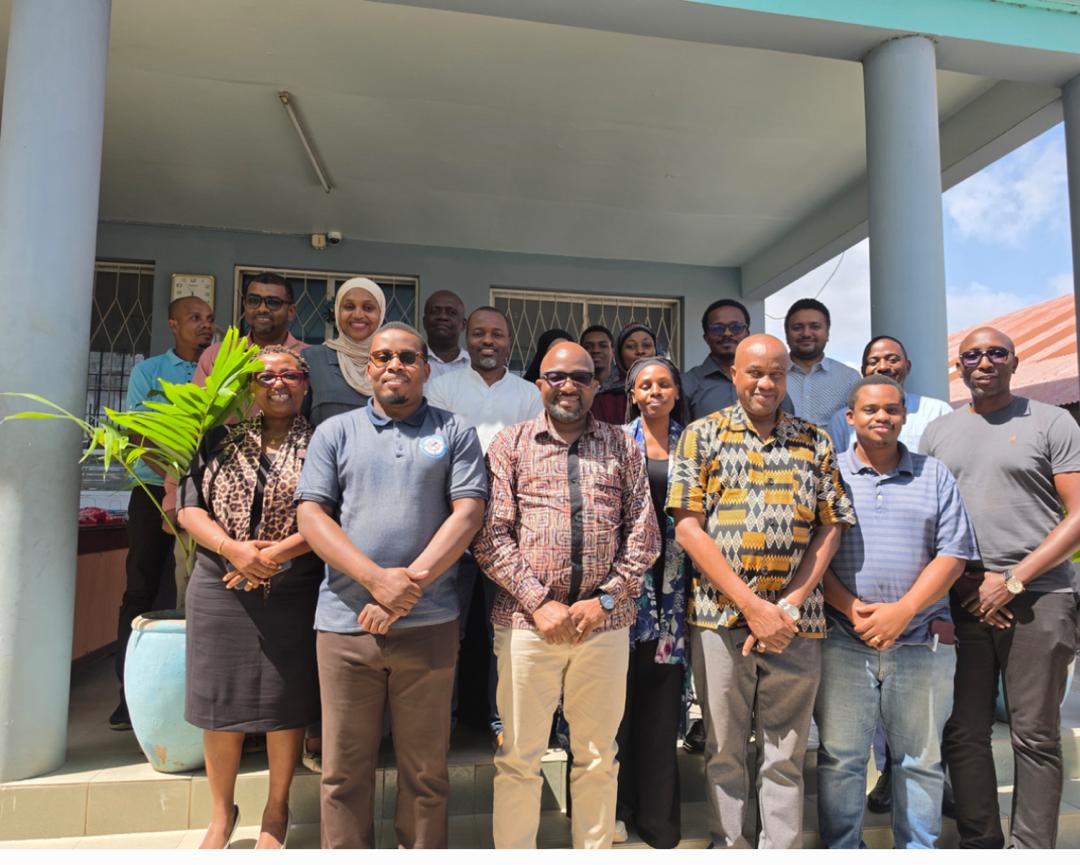
From 22–26 June 2026, the Zanzibar Malaria Elimination Programme (ZAMEP), together with partners implementing larval source management (LSM) interventions in Zanzibar, is convening a one-week workshop aimed at reviewing and harmonizing the standard operating procedures (SOPs) and operational tools that will guide LSM implementation across the islands.
The workshop brought together key implementing partners, including the Ifakara Health Institute (IHI), Swiss TPH’s TEMT project, the Swiss TPH and PSI MEZA project, and the Jhpiego RISE Project, in a coordinated effort to strengthen alignment and standardization of LSM activities in Zanzibar.
Within this collaborative platform, the Ifakara Health Institute is actively contributing through two ongoing LSM-related initiatives: the GeoLSM project (Harnessing Geospatial Technologies for Operational Larval Source Management in Zanzibar) and the Smart-Drone LSM project (Smart Drone Technology for a Malaria-Free Future in Zanzibar).
Representing the GeoLSM project at the workshop are Dr. Tegemeo Gavana, Dr. Sally Mtenga, Dr. Irene Moshi, Gerald Kiweru, and Douglas Ndowo. The team has been fully engaged in detailed technical sessions reviewing and refining SOPs that will guide field implementation and coordination of LSM activities across different operational contexts in Zanzibar.
As part of the technical agenda, Dr. Tegemeo Gavana also presented updates from the Smart-Drone LSM project, highlighting the potential of drone-enabled approaches in strengthening precision, efficiency, and coverage of larval source management interventions.
Beyond SOP review, the workshop has served as an important platform for fostering stronger coordination among implementing partners and encouraging more harmonized and collaborative approaches to LSM delivery in Zanzibar’s malaria elimination efforts.
Speaking during the discussions, Dr. Sally Mtenga, Co-Investigator in the GeoLSM Process Evaluation, noted that the meeting provided an important opportunity for the evaluation team to better understand the evolving, context-specific structures, administrative systems, partners, and programs involved in LSM implementation in Zanzibar. She added that these insights will directly inform the design of upcoming GeoLSM participatory evaluation activities including the theory of change workshop which are planned to be conducted within the respective communities.
Overall, the workshop marked a key step toward strengthening operational consistency, enhancing partner alignment, and advancing evidence-based larval source management as part of Zanzibar’s broader malaria elimination agenda.
We're a Registered Charity Organization in Tanzania
Ifakara Health Institute (IHI) is officially recognized as a charitable organization under the Income Tax Act. Certification issued on 20 March 2025 and valid until 31 December 2030.
Ifakara Health Institute (IHI) is officially recognized as a charitable organization under the Income Tax Act. Certification issued on 20 March 2025 and valid until 31 December 2030.