

MALARIA WARNING: Drug resistance mutation spreads across northwestern Tanzania
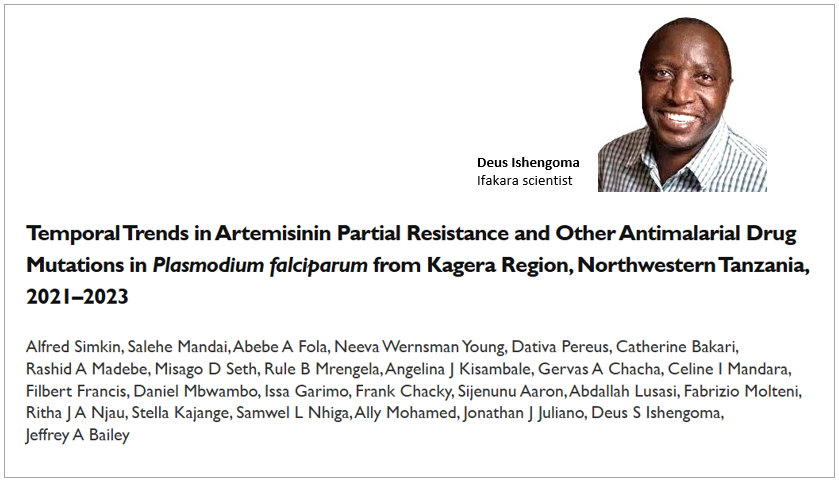
A key malaria treatment is still working—but warning signs are growing. A genetic mutation linked to reduced sensitivity to the world's most important malaria drugs is spreading across parts of northwestern Tanzania, raising concerns about the future effectiveness of malaria treatment if the trend continues.
A new study, whose results were published in Frontiers in Genetics recently, has found that the K13 R561H mutation—a genetic change in the malaria parasite associated with partial resistance to artemisinin, the core component of artemisinin-based combination therapies (ACTs)—has persisted in Tanzania's Kagera Region and is gradually expanding into new districts.
While ACTs continue to cure the vast majority of malaria patients, researchers say the findings serve as an early warning. They stress that close monitoring is essential to detect resistance before it becomes widespread and threatens one of the world's most effective malaria treatments.
Scientists from the Ifakara Health Institute, including Salehe Mandai, Dativa Pereus, Catherine Bakari, Rule Budodo, Angelina Kisambale, and Deus Ishengoma (co-last author), played a key role in the research alongside colleagues from the National Institute for Medical Research (NIMR), the National Malaria Control Programme (NMCP), Brown University and other partner institutions.
Why it matters
Malaria remains one of Tanzania's leading public health challenges, and ACTs are the country's first-line treatment for uncomplicated malaria. If parasites become increasingly resistant to artemisinin, patients could take longer to recover, treatment failures could become more common, and efforts to reduce malaria cases and deaths could face new setbacks.
Researchers say identifying resistance early gives health authorities time to respond—whether by increasing surveillance, strengthening malaria control measures or, if necessary, updating treatment policies before resistance becomes entrenched.
Resistance spreading beyond the original hotspot
The team examined parasite samples from seven districts across Kagera. They found that the K13 R561H mutation remained most common in the border districts of Karagwe and Kyerwa, where it had previously been reported.
However, the mutation was also detected for the first time in Muleba in 2022 and Bukoba Rural in 2023, suggesting that resistant parasites are gradually spreading eastwards towards the Lake Victoria basin.
Overall, the prevalence of the mutation increased modestly during the three-year study period, from 5.5% in 2021 to 6.9% in 2023.
Although the increase was small, the researchers say it highlights the importance of detecting changes early, before they begin to affect treatment outcomes.
Other resistance markers remain stable
The researchers also examined genetic mutations linked to resistance against other antimalarial medicines.
They found little evidence that resistance to ACT partner drugs is increasing significantly. However, mutations associated with resistance to sulfadoxine-pyrimethamine (SP) – a medicine still used to prevent malaria during pregnancy – remained widespread across western Kagera.
The researchers say the findings reinforce the need for routine genetic surveillance to detect emerging resistance early and guide malaria control efforts.
They conclude that continued monitoring will help health authorities identify areas at greatest risk, protect the long-term effectiveness of lifesaving malaria treatments and stay ahead of drug resistance before they become a wider public health threat.
Read the publication, here.