
CONFIRMED: New evidence supports continued use of life-saving HIV medicine during pregnancy
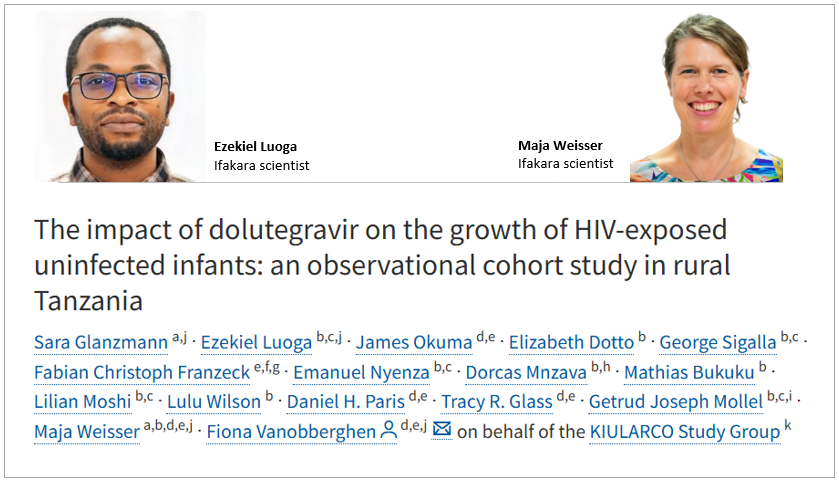
A widely used HIV medicine taken during pregnancy does not appear to affect the growth of babies exposed to the drug before birth, according to a new study from Tanzania.
Researchers followed more than 1,000 HIV-exposed but uninfected (HEU) infants and found that babies whose mothers received dolutegravir, the recommended first-line HIV treatment since 2019, grew at similar rates to those whose mothers were treated with the older medicine containing efavirenz.
"Our findings support the continued use of dolutegravir as the preferred first-line antiretroviral therapy and emphasise the need for further research and targeted interventions to improve the health of the growing population of HIV-exposed uninfected infants," the researchers say.
Published recently in The Lancet eClinicalMedicine, the study adds to growing evidence that dolutegravir is a safe and effective treatment during pregnancy, emphasizing its use as the preferred first-line HIV therapy for pregnant women.
Ifakara and international partners behind the research
The study, carried out in 2025, was led by Tanzanian scientists in collaboration with international partners. The team included researchers from the Ifakara Health Institute, with Ezekiel Luoga and Maja Weisser serving as co-lead authors, alongside Elizabeth Dotto, George Sigalla, Emanuel Nyenza, Dorcas Mnzava, Mathias Bukuku, Lilian Moshi, Lulu Wilson, and Getrud Joseph Mollel.
The study also involved collaborators from St. Francis Regional Referral Hospital, University Hospital Basel, the Swiss Tropical and Public Health Institute, and Charité – University Medicine Berlin.
Why the study matters
For women living with HIV, taking effective treatment during pregnancy is essential — both for their own health and for reducing the chance of passing HIV to their babies.
The new findings provide reassurance for mothers and health programmes that dolutegravir, now widely recommended around the world, does not appear to compromise infant growth.
A medicine changing HIV care
Dolutegravir has transformed HIV care because it works quickly, is highly effective at suppressing the virus, and is less likely to be affected by drug resistance compared with many older medicines.
Because of these advantages, many countries — including Tanzania — have adopted dolutegravir-based treatment as the preferred first-line therapy for people living with HIV.
However, as its use expanded among women of reproductive age, scientists wanted to better understand whether exposure could influence the health and development of their babies.
More than 1,000 infants followed in rural Tanzania
The research team analysed data from the Kilombero and Ulanga Antiretroviral Cohort (KIULARCO), a long-running HIV research cohort in rural Tanzania.
They analysed records from 1,019 HIV-exposed but uninfected infants born to 844 mothers living with HIV between 2012 and 2024.
Researchers compared infants whose mothers received:
- Dolutegravir-based HIV treatment
- Efavirenz-based HIV treatment, the older standard regimen
The team tracked infant growth up to 18 months of age, measuring indicators including length, weight and risks of conditions such as stunting and wasting.
No evidence linking dolutegravir with poor growth
The study found no evidence that dolutegravir exposure affected infant growth.
After accounting for other factors that can influence child development, researchers found no meaningful differences between infants exposed to dolutegravir and those exposed to efavirenz
The results suggest that mothers can continue using dolutegravir during pregnancy without increasing the risk of early growth problems among babies who remain HIV-free.
A step forward in protecting mothers and babies
The findings are important for countries that have transitioned to dolutegravir-based HIV treatment programmes.
For healthcare providers and policymakers, the study provides further confidence that dolutegravir can be safely used during pregnancy while protecting mothers and infants from HIV.
The results also support the need for integrated maternal and child health services that combine HIV care with nutrition support, growth monitoring and early childhood interventions.
Read the publication here.
We're a Registered Charity Organization in Tanzania
Ifakara Health Institute (IHI) is officially recognized as a charitable organization under the Income Tax Act. Certification issued on 20 March 2025 and valid until 31 December 2030.
Ifakara Health Institute (IHI) is officially recognized as a charitable organization under the Income Tax Act. Certification issued on 20 March 2025 and valid until 31 December 2030.