
FRESH EVIDENCE: Regular exercise at school can improve child health and development
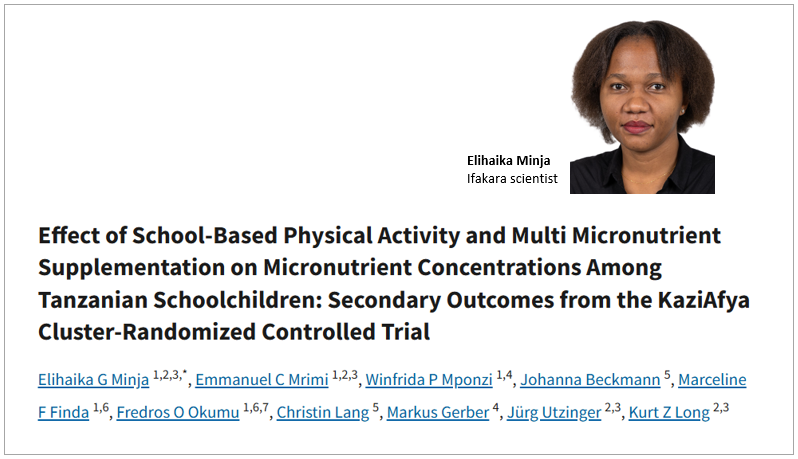
Regular physical activity in schools could do more than keep children fit, it may also improve their nutritional health by reducing zinc deficiency, according to a new study led by scientists from Ifakara Health Institute and Swiss partners.
Published in Nutrients, the study found that children who regularly participated in structured school-based physical activity were less likely to have zinc deficiency than those who did not. The findings add to growing evidence that school health programmes can support children's health in multiple ways beyond promoting physical fitness.
The study was led by Ifakara scientist Elihaika Minja, with contributions from fellow Ifakara researchers Emmanuel Mrimi, Winfrida Mponzi, Marceline Finda and Fredros Okumu, alongside collaborators from the Swiss Tropical and Public Health Institute and the University of Basel.
Why this matter
Many school health programmes focus separately on improving nutrition or encouraging physical activity. This study suggests that integrating regular exercise into the school day may also help improve children's nutritional status.
The findings further indicate that micronutrient supplements alone may not be enough to address all nutritional deficiencies, highlighting the importance of more comprehensive approaches that combine healthy diets, physical activity and other child health interventions.
Addressing a hidden health challenge
Micronutrient deficiencies—often referred to as "hidden hunger"—affect millions of children worldwide. A lack of essential nutrients such as iron, zinc and vitamin D can weaken the immune system, slow physical growth, reduce learning ability and affect overall development.
To investigate practical solutions, researchers analyzed data from the KaziAfya project, a multicountry trial conducted between 2019 and 2021 in Tanzania, Côte d'Ivoire and South Africa.
This study later enrolled 1,034 primary school children aged 6 to 12 years from Kilombero District, Tanzania. The children were assigned to one of four groups: a school-based physical activity programme, daily multi-micronutrient supplementation, both interventions combined, or a control group. Their health was monitored for 26 months.
Exercise delivered unexpected nutritional benefits
At the start of the study, iron and vitamin D deficiencies were common among the participating children, while approximately one in eight had zinc deficiency.
By the end of the 26-month follow-up, children who took part in the school-based physical activity programme were less likely to have zinc deficiency than those who did not participate. This improvement was observed whether physical activity was delivered on its own or alongside micronutrient supplementation.
In contrast, children who received micronutrient supplements alone showed no significant improvements in zinc or iron status. Researchers also found no meaningful differences in iron levels between the study groups. Although vitamin D status was assessed, too few valid blood samples were available to allow firm conclusions.
Rethinking school health programmes
The findings suggest that promoting regular physical activity in schools could offer benefits beyond improving fitness, but also to improved nutritional health among school-aged children.
While the biological reasons behind the improvement in zinc status remain unclear, researchers believe physical activity may influence how the body absorbs, uses or regulates essential nutrients. They recommend further research to better understand these mechanisms and to identify the most effective combinations of nutrition and physical activity interventions.
As countries continue investing in child health and education, evidence from studies such as KaziAfya can help guide more effective school-based programmes that support healthier growth, learning and development.
Read the publication here.
We're a Registered Charity Organization in Tanzania
Ifakara Health Institute (IHI) is officially recognized as a charitable organization under the Income Tax Act. Certification issued on 20 March 2025 and valid until 31 December 2030.
Ifakara Health Institute (IHI) is officially recognized as a charitable organization under the Income Tax Act. Certification issued on 20 March 2025 and valid until 31 December 2030.