HIV AND AGEING: Study identifies factors affecting the quality of life among older people with HIV
As more people living with HIV survive into older age thanks to the widespread availability of antiretroviral therapy (ART), researchers are calling for greater attention to the health and well-being challenges that accompany ageing.
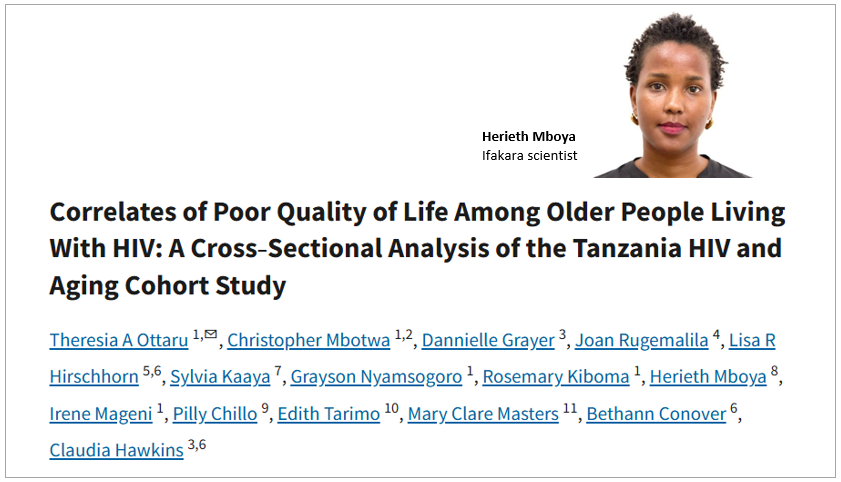
A new study by Tanzanian researchers and collaborators from the United States has identified depression, frailty and difficulty performing everyday activities as the main factors associated with poorer quality of life among older people living with HIV in Tanzania. Among the study’s authors is Ifakara Health Institute scientist Herieth Mboya.
Why this matters
Advances in HIV treatment have transformed HIV from a life-threatening illness into a manageable long-term condition, allowing more people to live into older age. However, ageing with HIV can bring new health challenges, including chronic diseases, mental health concerns and reduced physical function. Understanding these challenges is essential for designing HIV services that support not only longer lives, but also healthier and more independent lives.
Published recently in the Journal of the International AIDS Society, the study which was conducted in 2024, analyzed data from the Tanzania HIV and Aging Cohort Study (THALCS) involving 400 adults aged 50 years and above receiving HIV care at seven health facilities in urban Tanzania.
Growing population, changing healthcare needs
Researchers assessed participants’ quality of life using the World Health Organization’s WHOQOL-HIV-BREF tool, which measures physical health, psychological well-being, level of independence, social relationships, environmental conditions and spirituality.
The findings showed that many participants were also living with health conditions commonly associated with ageing. More than half had hypertension, four in five had abnormal blood lipid levels, and about half were overweight or obese. Nearly half were classified as pre-frail, while about one in seven were already experiencing frailty.
These findings reflect the changing healthcare needs of people living with HIV as they age, and the importance of providing care that addresses more than HIV treatment alone.
Mental and physical health strongly influence quality of life
Participants with symptoms of depression reported significantly poorer quality of life than those without depression, with the greatest impact observed among those experiencing moderate to severe depression.
Similarly, frailty, pre-frailty and difficulties performing daily activities were also linked to lower quality-of-life scores, underscoring the importance of maintaining both physical and mental health as people age with HIV.
The researchers also found that participants with higher monthly incomes generally reported better quality of life, suggesting that financial security is an important contributor to overall well-being.
A need for person-centred HIV care
The findings underscore the need for HIV care programmes to evolve beyond achieving viral suppression and address the broader health needs of an ageing population.
The researchers recommend integrating holistic care models into HIV programmes for older people living with HIV. This includes routine screening and management of depression, frailty and other age-related conditions within HIV care services, while strengthening rehabilitation support and interventions that help older adults maintain their independence and overall well-being.
Read the publication here.
We're a Registered Charity Organization in Tanzania
Ifakara Health Institute (IHI) is officially recognized as a charitable organization under the Income Tax Act. Certification issued on 20 March 2025 and valid until 31 December 2030.
Ifakara Health Institute (IHI) is officially recognized as a charitable organization under the Income Tax Act. Certification issued on 20 March 2025 and valid until 31 December 2030.