
LIVESTOCK HEALTH: Study shows how safer handling practices can help reduce disease risk
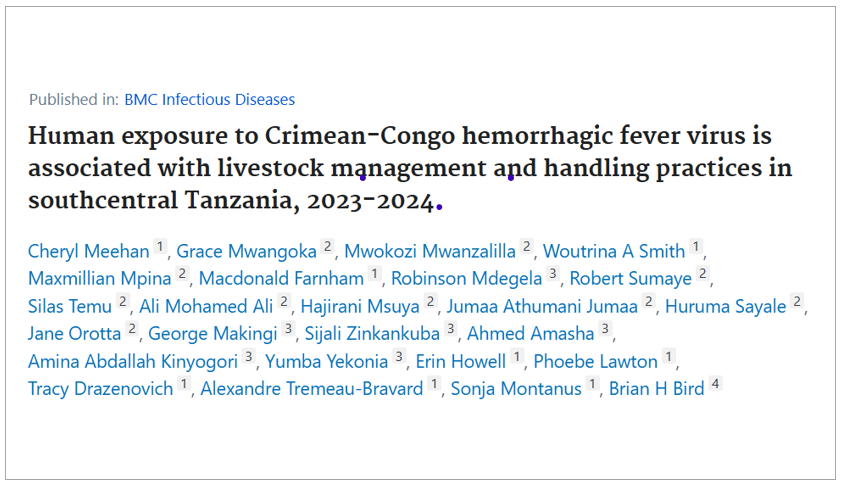
A new publication co-authored by scientists from Ifakara Health Institute (IHI) and partners has found that the way livestock are managed and handled can affect people's risk of catching diseases that spread from animals to humans. The findings provide practical lessons that can help livestock keepers protect both their families and their animals.
Published in BMC Infectious Diseases, the study looked at exposure to Crimean-Congo hemorrhagic fever virus (CCHFV) among 850 adults living in livestock-keeping communities in southcentral Tanzania between 2023 and 2024. Researchers interviewed participants about how they keep and handle their animals and tested blood samples to see whether they had been exposed to the virus in the past.
Tanzania, US researchers led the study
The study was a collaboration between researchers from Ifakara Health Institute, the One Health Institute at the University of California, and Sokoine University of Agriculture.
IHI scientists who contributed to the research included Grace Mwangoka, Mwokozi Mwanzalilla, Maxmillian Mpina, Robert Sumaye, Silas Temu, Ali Mohamed Ali, Hajirani Msuya, Jumaa Athumani Jumaa, Huruma Sayale and Jane Orotta. Their contribution supported the generation of evidence on how livestock management practices can influence the risk of diseases shared between animals and people.
How the disease spreads
Crimean-Congo hemorrhagic fever is a disease mainly spread by infected ticks or through contact with the blood or body fluids of infected animals. Cattle, goats and sheep can carry the virus without appearing sick, meaning people who regularly handle livestock may be at greater risk of infection.
The study found that about three in every 100 people had been exposed to the virus. Older adults were more likely to have been exposed than younger people.
Safer livestock practices can reduce risk
Researchers also found that some everyday livestock practices increased the risk of infection. People who butchered or ate animals that had died from illness were much more likely to have been exposed to the virus. On the other hand, livestock owners who grazed their animals on private land without mixing them with other herds were less likely to have been exposed.
The researchers emphasize that improving awareness of animal-handling practices and strengthening collaboration between human and animal health sectors are important steps in reducing the risk of zoonotic diseases.
The findings show that simple actions, such as avoiding the slaughter or consumption of animals that die from illness and following safe animal-handling practices, can help reduce the risk of diseases that spread between animals and people. The researchers also call for closer collaboration between human and animal health experts to improve disease surveillance and prevention.
Why these findings matter to the farming community
As Tanzania marks the 2026 National Farmers' Day (Nane Nane), the study highlights how research can support farmers and livestock keepers with practical knowledge to keep their animals healthy and reduce the risk of disease. By turning scientific evidence into simple advice, research can help protect livelihoods, strengthen food security and improve the health of farming communities across the country.
The study is another example of IHI's commitment to conducting research that addresses everyday challenges facing Tanzanian communities and supports healthier lives through practical, evidence-based solutions.
Read the publication, here.
We're a Registered Charity Organization in Tanzania
Ifakara Health Institute (IHI) is officially recognized as a charitable organization under the Income Tax Act. Certification issued on 20 March 2025 and valid until 31 December 2030.
Ifakara Health Institute (IHI) is officially recognized as a charitable organization under the Income Tax Act. Certification issued on 20 March 2025 and valid until 31 December 2030.