

#NANENANE2026: Ifakara exhibits innovative mosquito trap for safer malaria surveillance
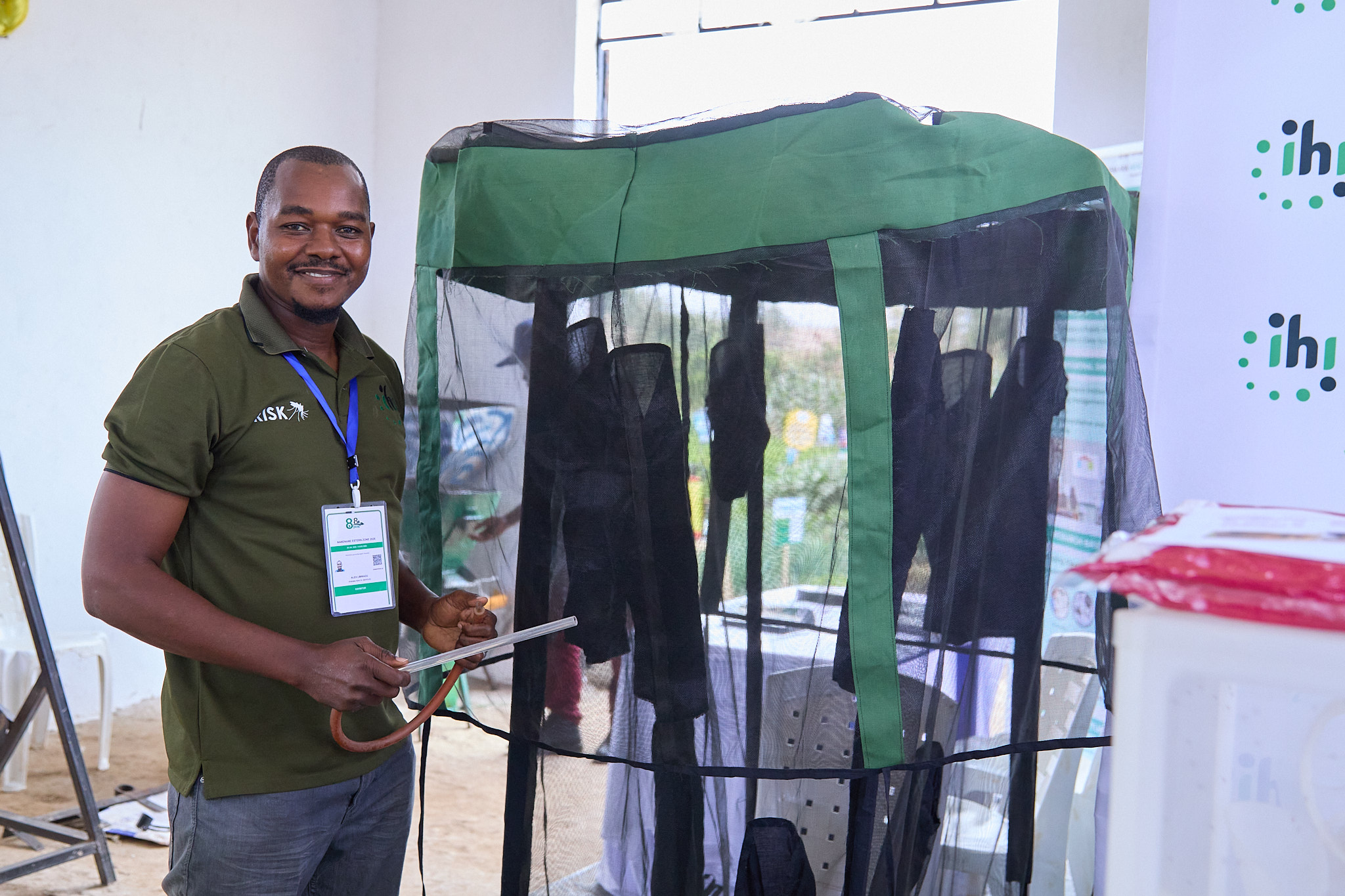
Visitors to the Ifakara Health Institute (IHI) pavilion at the 2026 National Farmers' Day (Nane Nane) Exhibition in Morogoro are getting a closer look at an innovative mosquito surveillance tool developed by IHI scientist Alex Limwagu. The Double Net Mini Trap (DN-Mini Trap) is among the research innovations being showcased at this year's exhibition, demonstrating how it supports malaria vector surveillance.
The exhibition, taking place from 1–8 August 2026 at the Julius Nyerere Exhibition Grounds in Morogoro, provides an opportunity for farmers, students, policymakers, researchers and the general public to learn how research and innovation are addressing national development challenges.
Addressing a challenge in malaria surveillance
Malaria vector surveillance is essential for understanding where mosquitoes are found, how they behave and whether control interventions are working. However, conventional methods such as the Human Landing Catch require volunteers to expose themselves to mosquito bites, raising ethical and safety concerns.
The DN-Mini Trap was developed as a safer alternative that collects host-seeking mosquitoes without exposing people to infectious bites, while still providing reliable data for malaria surveillance.
Research demonstrates promising results
The innovation was evaluated through a study conducted by Alex Limwagu in the Ulanga District of south-eastern Tanzania. The research compared the DN-Mini Trap with the commonly used CDC light trap and found that the DN-Mini Trap captured more of the dominant malaria vector, Anopheles funestus, making it a promising tool for monitoring malaria transmission. The findings were published in PLOS ONE in 2024.
Transforming research into public health solutions
According to Limwagu, the trap has the potential to strengthen routine malaria vector surveillance by providing a safer and effective method for monitoring mosquito populations. He hopes the technology will continue generating evidence to support its wider adoption in malaria control programmes and inspire further innovation in vector surveillance.
The DN-Mini Trap is one of several innovations featured at the Ifakara Health Institute pavilion during Nane Nane 2026. By bringing research innovations directly to the public, the exhibition also highlights the important role of science in protecting communities and strengthening disease prevention efforts.
We're a Registered Charity Organization in Tanzania
Ifakara Health Institute (IHI) is officially recognized as a charitable organization under the Income Tax Act. Certification issued on 20 March 2025 and valid until 31 December 2030.
Ifakara Health Institute (IHI) is officially recognized as a charitable organization under the Income Tax Act. Certification issued on 20 March 2025 and valid until 31 December 2030.