
HOPE: This HIV pill gives couples a safe path forward
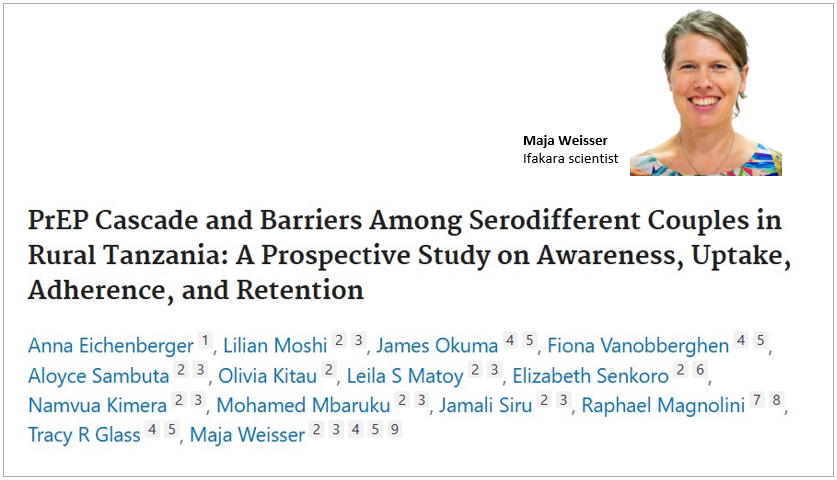
A new study led by scientists from Tanzania and Switzerland brings hopeful news for couples navigating HIV risk. It shows that just four months of pre-exposure prophylaxis (PrEP) — a daily pill that prevents HIV infection — can protect the HIV-negative partner in “serodifferent couples,” where one partner is HIV-positive and the other is not.
The research, published in late November in AIDS and Behavior, also reveals a harder truth: too many people still don’t know about PrEP, don’t feel safe talking about their HIV status, or don’t return for follow-up. These barriers are slowing HIV prevention efforts across sub-Saharan Africa.
The study took place at the Chronic Diseases Clinic of Ifakara (CDCI) at the Saint Francis Referral Hospital in rural Morogoro — a lifeline for people living with HIV.
A prevention tool that really works
PrEP is one of the most effective ways to stop HIV transmission. For serodifferent couples, it protects the HIV-negative partner until the HIV-positive partner reaches viral suppression — when the virus becomes undetectable and untransmittable.
With new dolutegravir (DTG)-based treatment helping people reach viral suppression much faster, the researchers asked a key question: Do couples really need seven months of PrEP, or could four months be enough?
Until now, no study had directly compared the two.
Strong protection — and fewer clinic burdens
Within the KIULARCO cohort, 22 of 37 eligible HIV-negative partners started PrEP. Over the full four-month follow-up, none contracted HIV — and no serious side effects were reported. Meanwhile, 96% of HIV-positive partners reached viral suppression within three months of starting ART.
For rural clinics already stretched thin — long travel distances, drug shortages, busy schedules — a shorter PrEP regimen could reduce pressure on both health workers and families.
But awareness and stigma are holding couples back
Despite PrEP’s strong protection, uptake remained low. The study found:
• Many partners were never tested.
• Only 22 of 37 eligible partners (59%) started PrEP.
• Only 9 of those who started (41%) returned for follow-up.
One of the biggest barriers? Fear of disclosure.
Many participants were afraid to tell their partners about their HIV status — worried about blame, stigma, or conflict. Without openness, partner testing and PrEP uptake become nearly impossible.
These challenges mirror what’s happening across rural sub-Saharan Africa: HIV prevention tools exist — but they can’t help people who don’t know about them, don’t feel safe using them, or can’t return to clinics.
A clear call to action
The findings echo this year’s World AIDS Day theme: Overcoming Disruption, Transforming the AIDS Response.
To stop HIV transmission, the response must go beyond treatment — communities need more awareness of PrEP, safe spaces for couples to talk openly, and access to prevention without stigma or fear.
This study delivers both a solution and a warning:
Short-term PrEP works — but only if people know it exists, trust it, and feel supported to stay on it.
The team behind the breakthrough
The study was led by Anna Eichenberger (University of Bern), with Prof. Maja Weisser of the Ifakara Health Institute (IHI) as senior last author. Tanzanian contributors from IHI include Lilian Moshi, Aloyce Sambuta, Leila Matoy, Namvua Kimera, Mohamed Mbaruku, and Jamali Siru, working alongside partners from Swiss TPH, University of Basel, Arud Centre for Addiction Medicine, University of Zurich, and University Hospital Zurich.