

HEALTH ECONOMICS: We should consider the true cost of seeking care
Across many low- and middle-income countries, people face numerous challenges when seeking health care, with one of the biggest barriers being costs. Evidence shows that the most expensive part of seeking care often happens before reaching the clinic. Yet, global systems that track financial protection rarely acknowledge this reality.
The costs we don’t measure — but should
For years, governments and international agencies have measured financial protection – a core pillar of Universal Health Coverage (UHC) – by tracking direct medical costs such as consultations, medicines, diagnostics, and procedures.
However, everyday costs in a person’s journey to care are often overlooked. These “hidden costs” include transport fares, long travel and waiting times, and income lost while seeking care. In many settings, these hidden costs can make up the majority of total health-care spending.
A call to address hidden costs in care
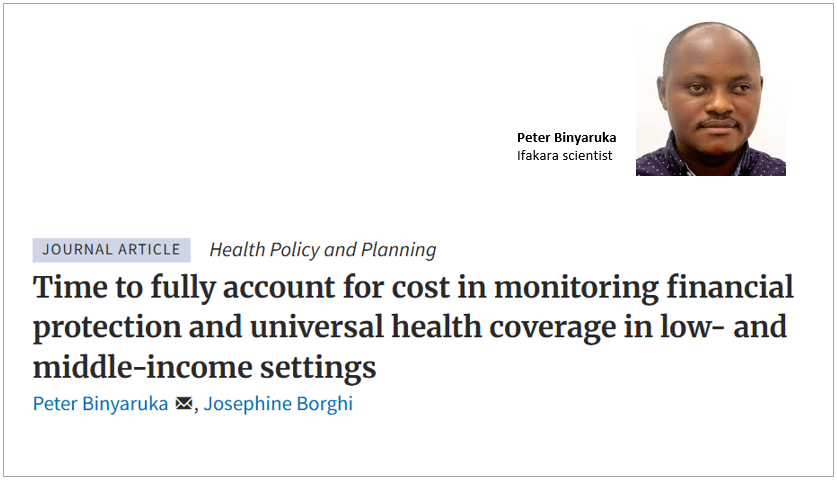
A recent commentary by Health Economist Peter Binyaruka from Ifakara Health Institute and Josephine Borghi from the London School of Hygiene and Tropical Medicine highlights this gap.
In the commentary, published in Health Policy and Planning journal, they argue that global monitoring systems fail to capture the full financial burden faced by households because they focus too heavily on direct medical expenses, while overlooking non-medical and indirect costs.
To address the gap, they urge governments and global health agencies to rethink how financial protection is measured. They underscore the need to broaden the focus on costs to include direct non-medical costs (e.g. transport) and indirect cost (time) when monitoring financial protection and investing in UHC.
Why measuring hidden costs is important
Binyaruka and Borghi’s commentary is important because it highlights a key gap in global health monitoring. While countries report progress toward UHC, the lived experiences of patients often tell a different story. If indirect costs are ignored, it can leave the poorest and most vulnerable unprotected.
By exposing these barriers, the authors offer guidance for more accurate measurement and policies that make health care accessible and affordable for all.
What needs to change: Key recommendations
To strengthen financial protection and UHC, the authors outline priority actions which include:
- Measuring transport and time costs systematically in household surveys
- Improving methods for valuing time spent seeking care
- Investing more in primary health care to reduce physical access barriers
- Designing financial-protection schemes that address non-medical costs.
- Adopting a multisectoral approach, including better roads, stronger social support systems, and economic policies that protect vulnerable groups.
A timely reminder ahead of UHC Day
As the world observes Universal Health Coverage Day, this year highlighting the “devastating human impact of unaffordable health costs”, this commentary serves as a timely reminder: achieving UHC goes beyond reducing clinic fees. Governments and global health organizations must also consider both medical and non-medical costs when tracking financial protection and investing in UHC.
Read the full publication here.