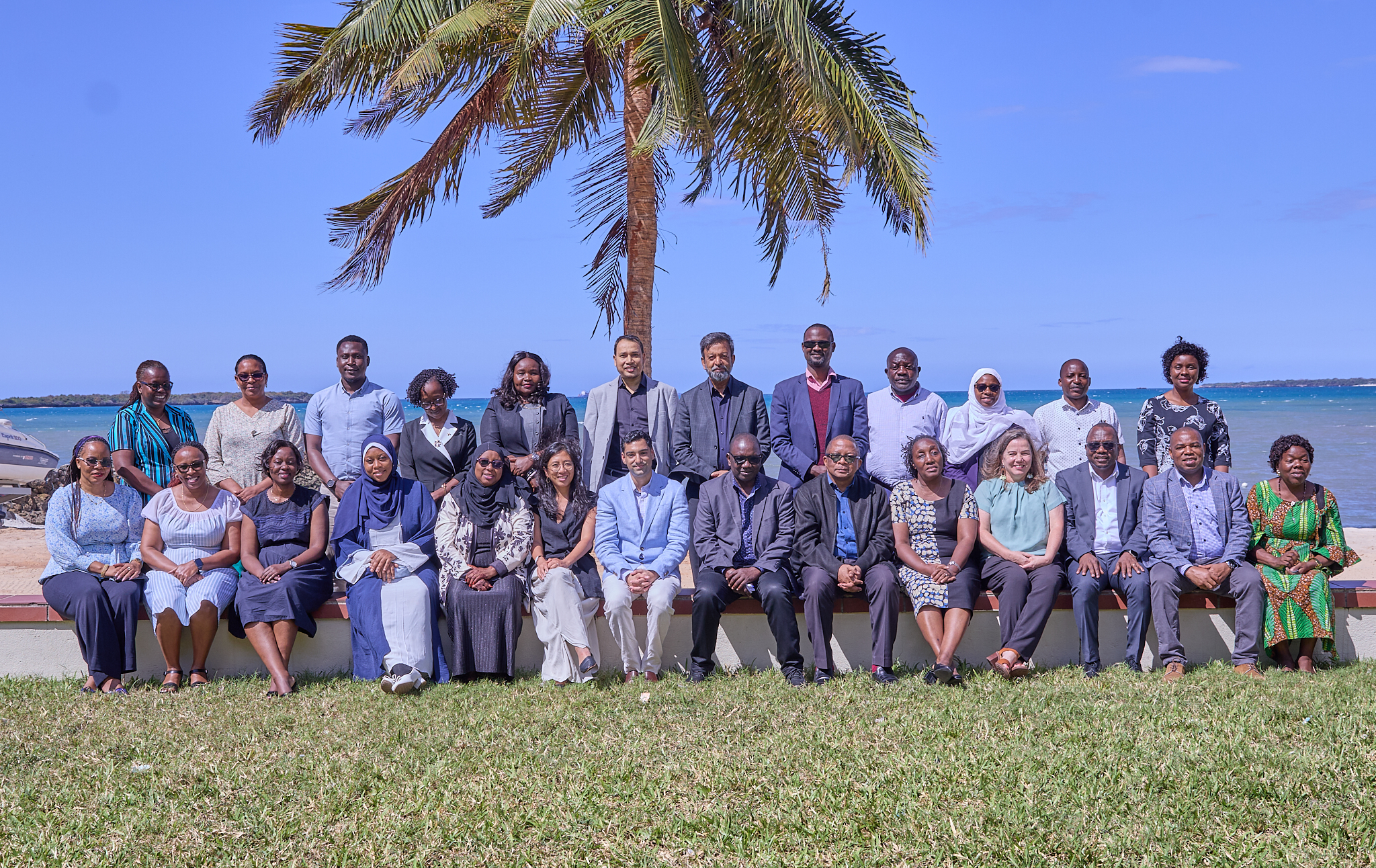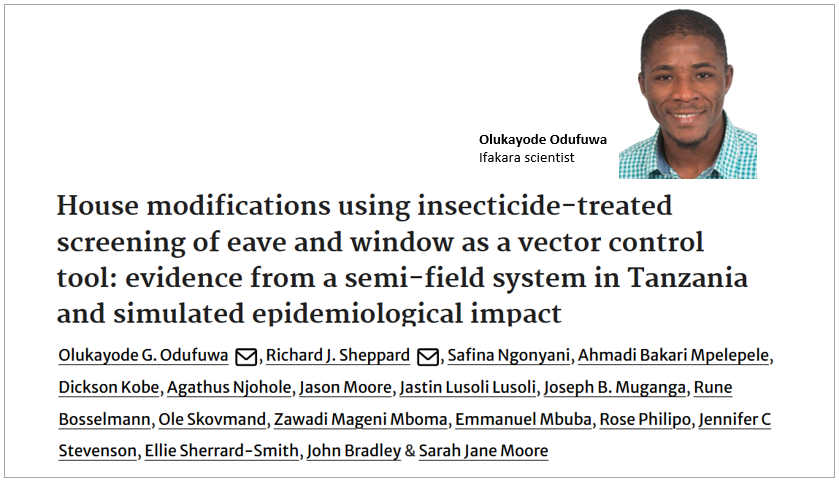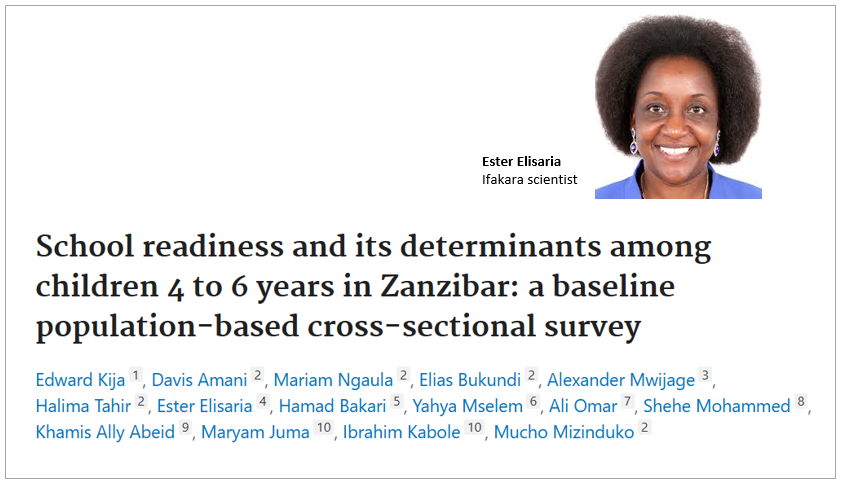
A snip from the BMC Medicine journal with an inset of Ifakara Health Institute scientist Abdallah Mkopi, who contributed to the study. GRAPHIC | IFAKARA Communications
HEART WELLNESS: Education linked to better outcomes in a global study
A new global analysis of health data from 36 low- and middle-income countries (LMICs) reveals a strong connection between education levels and cardiovascular health — a finding that could reshape prevention stra…
A snip from the Springer Nature journal with an inset of Ifakara Health Institute scientist Emmanuel Mrimi who contributed to the study. GRAPHIC | IFAKARA Communications
INNOVATION: New testing equipment detects hidden intestinal parasites in Pemba, Tanzania
A new test conducted by scientists reveals intestinal parasites are far more common than expected on Pemba Island, Tanzania, with nearly three in four people infected — highlighting the need for stronger public …
PLOS Pathogens Journal snippet featuring Ifakara Health Institute scientist Fredros Okumu, who contributed to the study through investigation, supervision, and writing – review & editing. GRAPHIC | IFAKARA Communications
MOSQUITOES: Could targeting their breeding grounds reduce malaria?
A new study has revealed that targeting mosquito breeding sites—known as larval source management (LSM)—can significantly reduce malaria transmission in parts of Africa.
BMC Malaria Journal snippet featuring Ifakara Health Institute scientist Emmanuel Mbuba, who led the study. GRAPHIC | IFAKARA Communications
INNOVATION: Digital imaging offers a faster, more accurate way to assess mosquito net damage
Blocking mosquitoes from reaching humans at night is one of the most effective strategies for preventing malaria. Insecticide-treated nets play a vital role in this protection, but over time they develop holes that we…
Graphic: Ifakara Communications
#WMD2025: Understanding the mosquito means saving lives
Every year on August 20, the world marks World Mosquito Day, recalling Sir Ronald Ross’s 1897 discovery that the mosquito transmits malaria. More than a century later, this tiny insect remains one of the deadlie…
The Daily Express print feature story.
FEATURE: Read UK’s The Daily Express article spotlighting Ifakara on the frontline against malaria
We at Ifakara Health Institute are delighted to have been visited by The Daily Express and the team from the …
PLOS One Journal snippet featuring Ifakara Health Institute scientist Dickson Kobe, who made significant contributions to the study. GRAPHIC | IFAKARA Communications
MOSQUITOES: New study maps breeding grounds in Zanzibar
Ever wondered where malaria-carrying mosquitoes thrive in Zanzibar? A groundbreaking study, featuring contributions from Dickson Kobe of the Ifakara Health Institute in Tanzania, has mapped their bree…
Oxford Academic Journal of Medical Entomology snippet featuring Ifakara Health Institute scientist Emmanuel Hape, who led the study. GRAPHIC | IFAKARA Communications
MOSQUITOES: Scientists crack the code on their elusive mating habits
A team of scientists from the Ifakara Health Institute in Tanzania and partner research centers in South Africa and the UK has uncovered key differences in how two major malaria vectors, anopheles funestus and anophel…
One of Ifakara’s lab technicians conducting a test for a visitor. PHOTO: IFAKARA Communications
LOOKING BACK: How Ifakara turned #NaneNane2025 into a week of health and hope
A week ago today, the buzz of the Tanzania Grand Farmers’ Exhibition faded across the country—but for many in Morogoro, the impact is still being felt. At the Nane Nane Grounds, …
BMJ Quality & Safety snippet featuring Ifakara Health Institute scientist Robert Tillya who contributed the study. GRAPHIC | IFAKARA Communications
NEWBORNS BETTER CARE: NEST360 study shows how to make it happen
A new international study — with contributions from Robert Tillya, a scientist at the Ifakara Health Institute in Tanzania — has shown that using implementation science alongside…