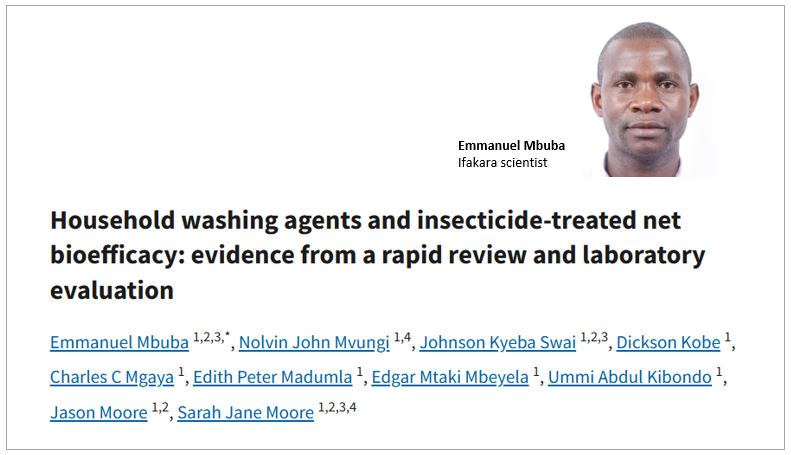
A snip from the The East African Health Research Journal with an inset of Ifakara Health Institute scientist Moshi Moshi Shabani, who contributed to the study. GRAPHIC | IFAKARA Communications
WARNING: Study finds undetected sickle cell cases on the rise in southern Tanzania
A new study is calling for wider sickle cell screening in Tanzania after uncovering unexpectedly high rates of sickle cell disease (SCD) in the country’s southern highlands. The findings, published on The Ea…
SACCOS Chair Ms. Adeline Herman delivers her presentation. PHOTO: IFAKARA Communications
MEETING: Ifakara’s Dar SACCOS convenes to receive updates and plan ahead
On 21st November 2025, members of the Ifakara Health Institute Dar es Salaam Branch Savings and Credit Cooperative Soci…
A snip from the International Journal of Obstetrics and Gynaecology, with an inset of Ifakara Health Institute scientist, Honorati Masanja, who contributed to the study. GRAPHIC | IFAKARA Communications
AN EYE-OPENER: Fresh evidence shows how common large babies are in low- and middle-income countries
A major new study has revealed how often babies are born larger than expected for their age in 23 low- and middle-income countries (LMICs) over the last two decades. The research focused on two conditions — larg…
A snip from the BMJ Public Health journal with an inset of Ifakara Health Institute scientists Atuganile Mtawa, who contributed to the study. GRAPHIC | IFAKARA Communications
SURVEY: 1 in 9 Tanzanian women has undiagnosed high blood pressure
High blood pressure is increasingly rising in Tanzania, with a new national study showing that more than one in ten women of reproductive age are living with the disease — a trend scientists warn could increase …
A snip from the PLOS Global Public Health journal with an inset of Ifakara Health Institute scientist Tani Kassimu, who contributed to the study. GRAPHIC | IFAKARA Communications
CHILD HEALTH: Stronger facilities key to protecting young lives
Fresh evidence from a study in rural Tanzania is urging governments to reconsider how they safeguard children’s health, as findings show that stronger primary healthcare is key to prevent many early ch…
Graphic: Ifakara Communications
WORLD CHILDREN’S DAY 2025: We’re committed to research, innovation and community programs for young lives
On World Children’s Day, the Ifakara Health Institute reaffirmed its commitment to safeguarding childr…
A snip from the Reproductive Health journal with a snip of Ifakara Health Institute scientist Winfrida Lyoba, the lead author of the study. GRAPHIC | IFAKARA Communications
MATERNAL HEALTH: Only 32 in 100 pregnant women go to the clinic early in western Tanzania, study reveals
A new study from Kasulu Town Council in Western Tanzania has raised concerns over the low number of pregnant women starting antenatal care (ANC) in their first trimester – an essential step in protecting the hea…
A snip from the Human Resources for Health journal with insets of Ifakara Health Institute scientists Robert Tillya and Josephine Shabani, who contributed to the study. GRAPHIC | IFAKARA Communications
NEWBORN CARE: Staffing shortages threaten survival of small and sick babies
As the world marks World Prematurity Day this week, we are reminded of the urgent need to strengthen care systems to save newborns lives. In a recent study led by partners within the Newborn Essential Solutions and Te…
Graphic: Ifakara Communications
WORLD PREMATURITY DAY 2025: Give preterm babies a strong start for a hopeful future
The Ifakara Health Institute joined families, healthcare professionals, and organizations worldwide in obs…
Snip from Montreux Collaborative website.
BLOG: Ifakara scientist featured on WHO blog on health financing
The Ifakara Health Institute’s Dr. Peter Binyaruka was featured by the World Health Organization in a Montreux C…