

Principal Investigator: Dr. Tegemeo Gavana
Project leader/ Coordinator: -
Project Administrator: Felix Brown
Funding Partner: Aberystwyth University
Start date: Sept. 1, 2025
End date: Aug. 31, 2028
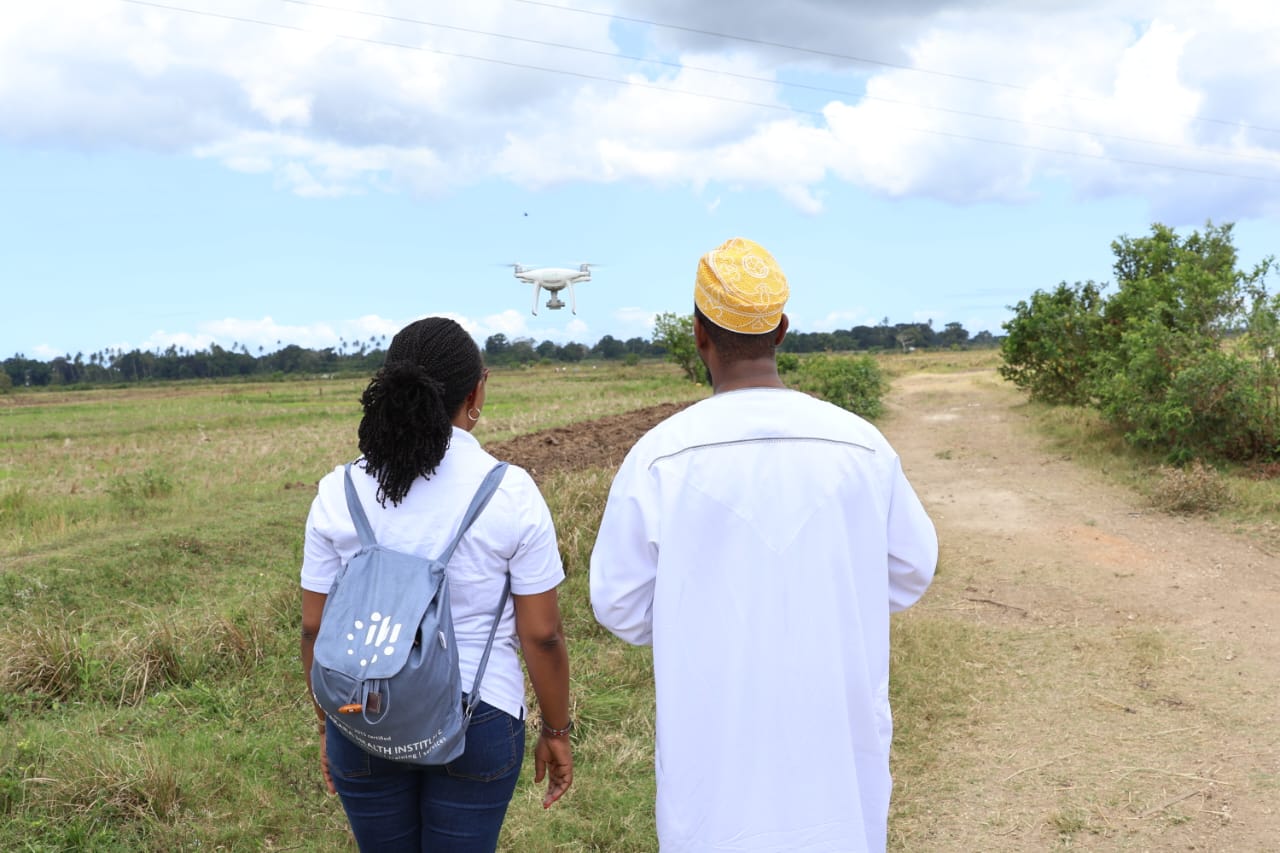
Using drone technology to improve mosquito control in Zanzibar – “GeoLSM Project”
The GeoLSM project — short for Harnessing geospatial technologies for operational Larval Source Management (LSM) in Zanzibar — is a malaria elimination initiative aimed at improving mosquito control using drone and geospatial technologies in Zanzibar. The project is led by the Ifakara Health Institute in collaboration with international and local partners.
Study rationale
Zanzibar has maintained very low malaria transmission, with cases remaining below 1% since 2006. However, researchers say existing interventions such as insecticide-treated bed nets (ITNs) and indoor residual spraying (IRS) may not be enough to completely eliminate malaria.
Imported cases and outdoor mosquito transmission continue to sustain infections, creating a need for additional mosquito control strategies on the Island.
The project focuses on improving Larval Source Management (LSM), an approach that targets mosquito breeding habitats using larvicides and environmental management. In Zanzibar, conventional LSM depends on ground teams to manually locate and map breeding sites. Researchers say this method is labor-intensive, costly and often less accurate.
Using drones and geospatial technology
GeoLSM project aims to develop and evaluate a technology-enabled LSM system that uses drones and geospatial information to identify mosquito breeding habitats more accurately and efficiently.
The project will compare the new technology-based approach with conventional LSM methods to assess operational efficiency, cost-effectiveness and impact on mosquito populations and malaria transmission.
Studying mosquito breeding environments
Researchers will also investigate how environmental and water quality factors influence mosquito breeding and larval development. Weekly monitoring of breeding habitats will help assess how changes over time affect mosquito productivity and survival.
Timeline and collaborators
The project started in September 2025 and is expected to run until August 2028, with support and funding from Aberystwyth University.
Collaborators include Aberystwyth University, Liverpool School of Tropical Medicine, London School of Hygiene & Tropical Medicine, the Zanzibar Malaria Elimination Program (ZAMEP) and ZzappMalaria.