

IFAKARA@70: Seven decades of innovation in the fight against malaria
For 70 years, the Ifakara Health Institute has been reshaping the global fight against malaria from rural Tanzania—transforming how the world understands, prevents, and seeks to eliminate one of humanity’s deadliest diseases.
What began in the 1950s as basic studies of mosquito behaviour has grown into a world-leading research enterprise working at the frontiers of artificial intelligence, genetic science, and public health innovation. The goal has remained constant: understand the mosquito well enough to defeat it.
How it all began
In the early years, Ifakara scientists worked in simple but demanding conditions, documenting how mosquitoes behave—where they breed, when they bite, and how they transmit disease.
Those early findings laid the foundation for modern malaria control. But perhaps more importantly, they established a philosophy that still defines Ifakara today: control strategies must be grounded in real-world ecology, not just laboratory theory.
That approach would go on to shape some of the most influential malaria tools used globally.
Recreating the village to study the mosquito
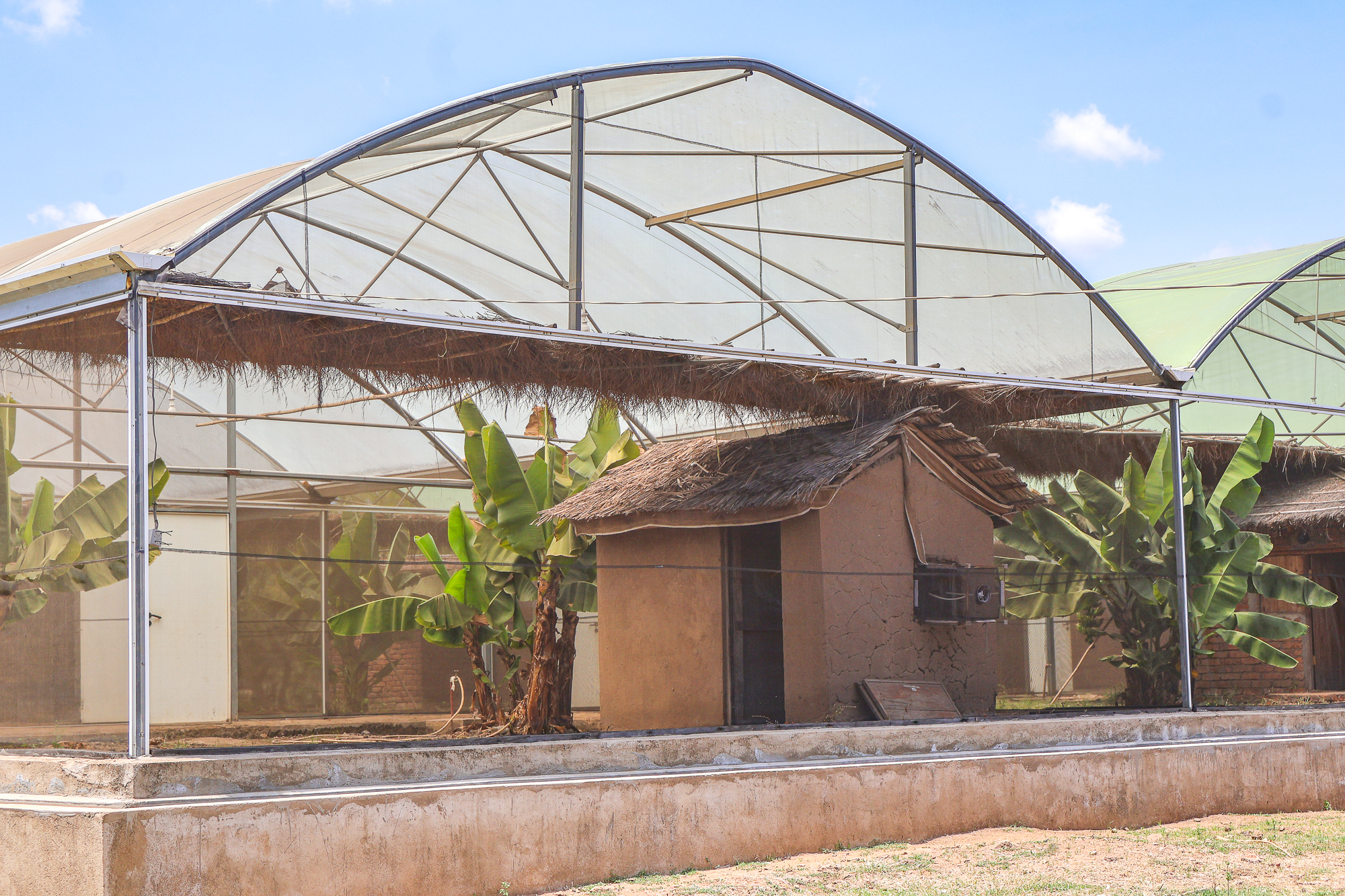
One of Ifakara’s landmark innovations came in the form of semi-field systems—large enclosed environments designed to replicate African village conditions.
Inside these controlled “mini ecosystems,” which are located in Ifakara and Bagamoyo, researchers can safely study mosquito behaviour while still reflecting real-life settings.
Through partnerships such as the Innovative Vector Control Consortium, Ifakara’s Vector Control Product Testing Unit (VCPTU) evaluates next-generation malaria tools under real-world conditions before they reach communities.
Today, these systems are considered a global gold standard for vector research.
The rise—and limits—of bed nets
By the 1990s and early 2000s, insecticide-treated bed nets had emerged as one of the most effective tools ever deployed against malaria.
Ifakara played a key role in evaluating their effectiveness and understanding how people actually used them in everyday life. The evidence was clear: where nets were widely used, malaria cases dropped.
But Ifakara scientists also uncovered a critical challenge. Mosquitoes were changing behaviour—biting earlier in the evening and increasingly outdoors, when people were not under nets.
Ifakara researchers were among the first to clearly document that malaria transmission was no longer confined to the home. This shifted global malaria strategies beyond bed nets and indoor spraying.
Rethinking protection: Better housing as a tool
The realization that bed nets alone were not enough helped shift the focus of malaria control beyond personal protection toward environmental design.
Ifakara researchers demonstrated that simple housing improvements—such as closing eaves and installing screened windows—could significantly reduce mosquito entry into homes.
This work evolved into the concept of Star Homes—elevated, well-ventilated houses designed to minimize mosquito exposure.
It was a quiet but important shift in thinking—treating housing itself as a form of malaria prevention.
New tools for a changing mosquito
As mosquito behaviour evolved, so did the tools.
Ifakara scientists have developed eave ribbons treated with spatial repellents to block mosquitoes from entering homes. They also advanced odour-baited traps that mimic human scent to lure mosquitoes away from people.
More recently, attention has turned to protection that moves with people.
Repellent-treated footwear and outdoor chairs have been explored as a way to create a protective “bubble” around individuals—particularly in outdoor settings where transmission risk remains high.
Diagnostics and detection innovations
Alongside prevention tools, Ifakara has also helped transform malaria diagnosis.
The institute contributed to the scale-up of rapid diagnostic tests, strengthening the shift toward “test-and-treat” policies in clinics.
But research has also shown a hidden challenge: many infections are asymptomatic, meaning people carry the parasite without feeling sick—yet still contribute to transmission.
To address this, scientists are now exploring artificial intelligence and infrared spectroscopy techniques capable of detecting malaria infections at very low levels.
In some studies, machine-learning models analyzing blood samples have achieved more than 90% accuracy.
Surveillance and data innovations
Ifakara’s work has also reshaped how malaria is tracked.
Using mathematical models and machine learning, researchers can now predict where outbreaks are likely to occur and how transmission will respond to interventions.
Long-term health and demographic surveillance systems provide rare, decades-long datasets linking environment, population, and disease trends.
This has helped reveal how malaria changes over time—how transmission declines in some areas while shifting to new mosquito species or behaviours in others.
The approach marks a shift from reacting to outbreaks to anticipating them.
Beyond control: towards elimination
Through its research centre in Bagamoyo, Ifakara has contributed to global clinical trials for malaria vaccines and treatments, working alongside international partners in late-stage studies.
And now, the institute is looking even further ahead.
Under its Transmission Zero programme, researchers are exploring whether malaria transmission itself can be interrupted through advanced approaches such as gene-drive mosquitoes and other genetic technologies—developed under strict scientific and ethical oversight.
The aim is not just to reduce malaria, but to stop it entirely.
A global impact from rural Tanzania
What began as field research in rural Tanzania now influences global health policy.
Ifakara research has helped inform national malaria strategies in Tanzania and beyond, shaped World Health Organization guidelines, and supported the development of new generations of vector control tools.
From experimental huts in rural Tanzania to global policy tables, the institute’s work has consistently fed evidence into action, helping move the world closer to eliminating malaria entirely.
Stay updated
Follow us here 👇 to stay updated — we’ll notify you whenever similar news, events and features are released.
🔔 LinkedIn | Facebook | Instagram
We're a Registered Charity Organization in Tanzania
Ifakara Health Institute (IHI) is officially recognized as a charitable organization under the Income Tax Act. Certification issued on 20 March 2025 and valid until 31 December 2030.
Ifakara Health Institute (IHI) is officially recognized as a charitable organization under the Income Tax Act. Certification issued on 20 March 2025 and valid until 31 December 2030.