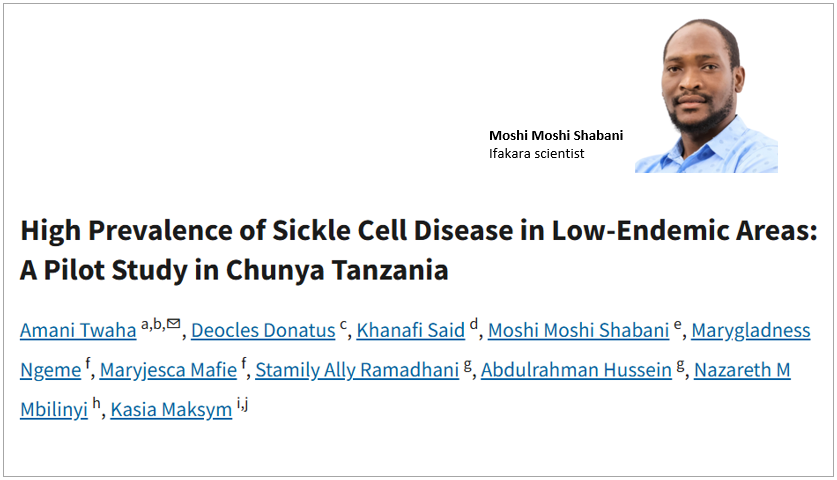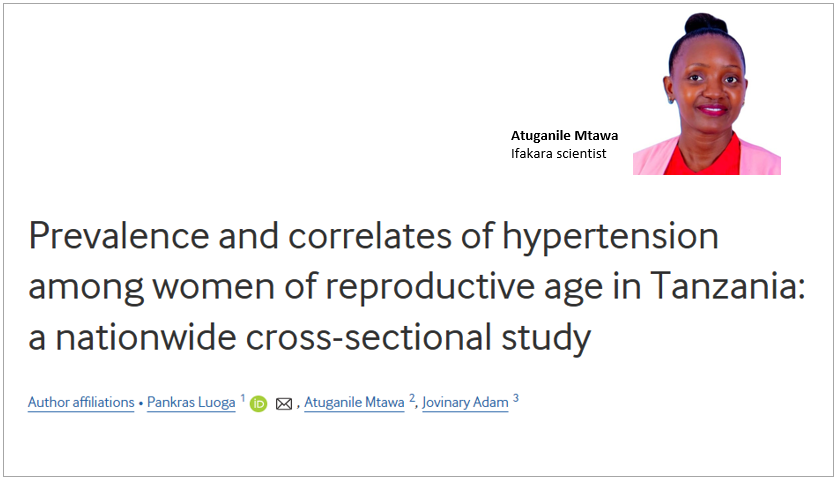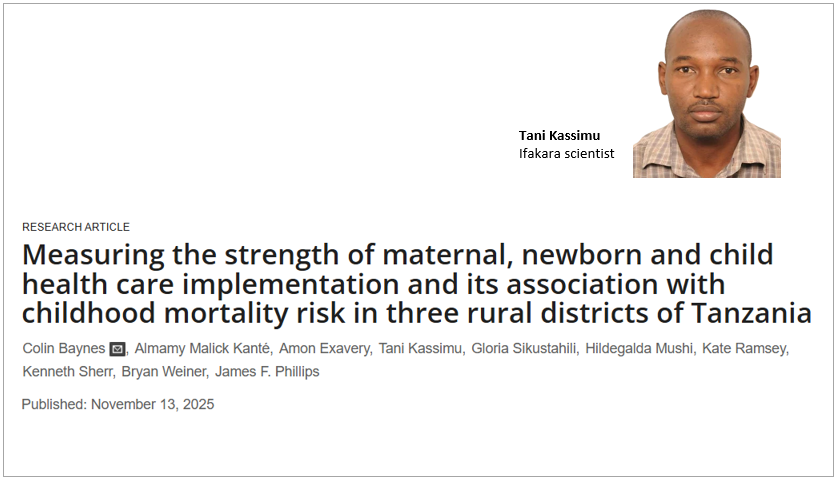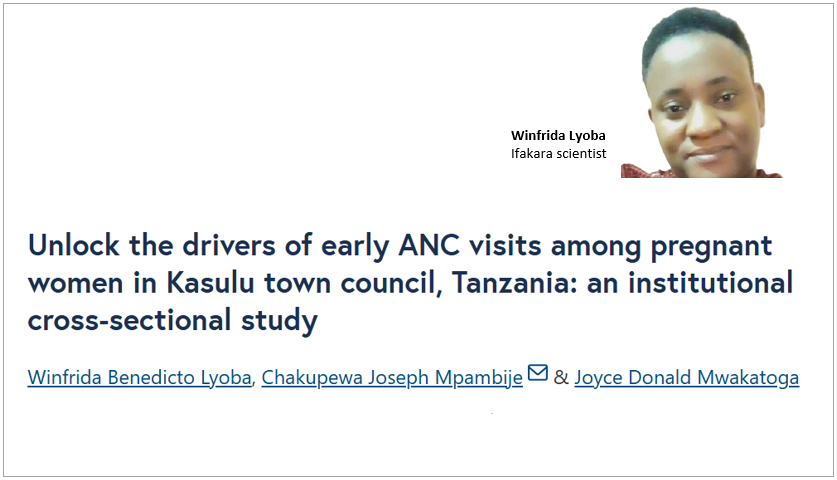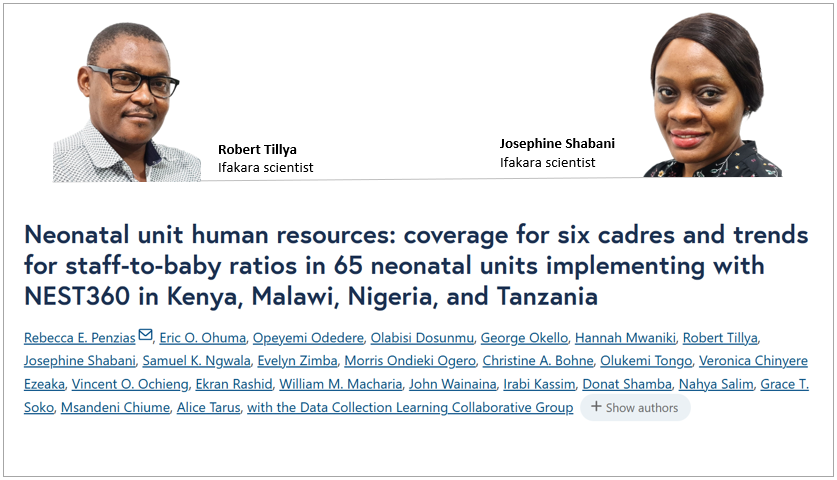
A snip from the BMC Pregnancy and Childbirth journal with an inset of Ifakara Health Institute scientist Jacqueline Minja, the lead author of the study. GRAPHIC | IFAKARA Communications
REPRODUCTIVE HEALTH: Scientists for birth spacing to improve maternal, child health
Scientists are calling for urgent action to promote optimal birth spacing in Tanzania, emphasizing its vital role in improving maternal and child health outcomes. This follows a recent study led by Ifakara Health Inst…
Eric Ochomo from the Kenya Medical Research Institute, and Co-Principal Investigator of the AnoSTEP project, gives an overview of the project to participants. PHOTO: IFAKARA Communications.
KICK-OFF: AnoSTEP project country principal investigators meet in Dar
From 20-22 February 2025, the Ifakara Health Institute’s "Comprehensive Assessment of the Biology and Publi…
A snip from the HIV Research & Clinical Practice journal with an inset of Ifakara Health Institute scientist, Elizabeth Senkoro, who contributed to the study. GRAPHIC | IFAKARA Communications.
COVID-19: Pandemic’s impact on black women living with HIV
A recent study by scientists from the UK and Tanzania shows that anxiety, stigma and trauma surged during the COVID-19 lockdowns for Black African and Black Caribbean women living with HIV, underscoring the need for i…
A snip from the HIV/AIDS journal
HIV CARE: Why do people living with the virus stop, restart treatment?
Ensuring that people living with HIV (PLHIV) remain in care and adhere to antiretroviral therapy (ART) is vital for their well-being and the success of HIV treatment programs. However, treatment interruptions remain a…
Graphic: Ifakara Communications
IMPACT: Ifakara scientific committee member to lead regional NCD alliance
The Ifakara Health Institute proudly celebrates Dr. Kaushik Ramaiya, a distinguished member of our Scientific Advisory…
A snip from the PLOS Digital Health journal with an inset of Ifakara Health Institute scientist, Honorati Masanja, who contributed to the study. GRAPHIC | IFAKARA Communications
DIGITAL HEALTH: Leveraging AI in epilepsy diagnosis
Machine learning has great potential to improve epilepsy diagnosis in low- and middle-income countries (LMICs), where access to specialists is often limited due to constrained healthcare resources and stigma surroundi…
A participant of the 6th Colposcopy course engages with one of the women from the Kilombero community who took part in the cervical cancer free screening program at Kilombero Hospital. PHOTO by IFAKARA Communications.
COMMUNITY ENGAGEMENT: Ifakara, partners lead the fight against cervical cancer in Kilombero
From February 11-17, 2025, Ifakara Health Institute, in collaboration with St. Francis Regional Referral Hospital (SFRRH), the University Hospital Basel and Charité-Universitätsmedizin Berlin provided free…
Participants of the Youth Empowerment Session take part in a hands-on practical exercise during the training. Photo courtesy of Omary Kimwaga
CAPACITY-BUILDING: Ifakara Hub empowers local youth with digital skills
On Friday, February 14, 2025, the Ifakara Innovation Hub (IIH) hosted a transformative Youth Empowerment Session to equip young people in the Ifakara region with essential digital skills to enhance their economic grow…
A snip from the Clinical and Translational Science journal with an inset of Ifakara Health Institute scientist Florence Milando, the lead author of the study. GRAPHIC | IFAKARA Communications.
MALARIA: How food influences drug effectiveness
Can food affect how well malaria drugs work? In a recent study at Ifakara Health Institute in Bagamoyo, Tanzania, scientists found that food influences how well the antimalaria drug, known as piperaquine tetraphosphat…
A snip from the BMC Parasites & Vectors journal with an inset of Ifakara Health Institute scientist Felician Meza who contributed to the study. GRAPHIC | IFAKARA Communications
MALARIA RESEARCH: Camera traps reveal effectiveness of sugar baits
In an innovative study conducted in rural Tanzania, researchers have employed advanced camera trap technology to gather reliable data on how mosquitoes interact with Attractive Targeted Sugar Baits (ATSBs).